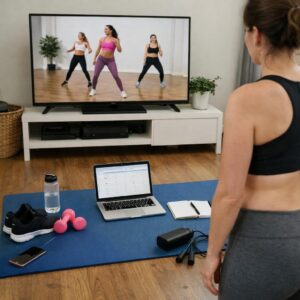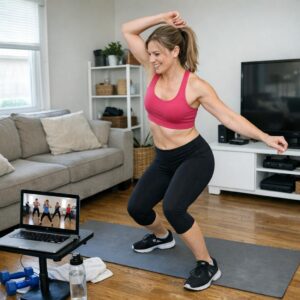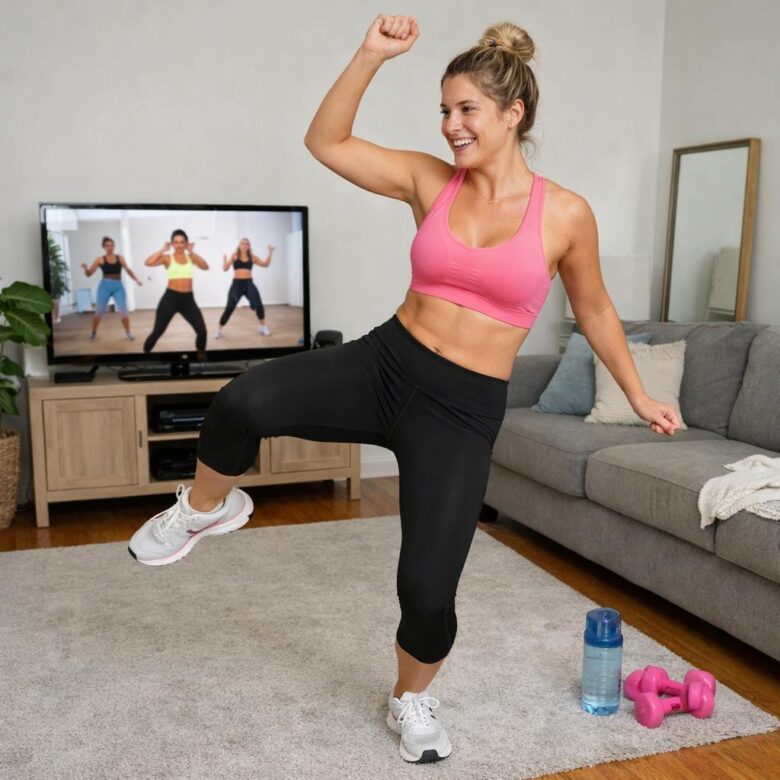
What if your best calorie-burning workout didn’t feel like exercise at all?
Dance workouts are one of the easiest ways for beginners to get moving at home-no gym, no equipment, and no complicated fitness plan required.
From low-impact Latin steps to upbeat hip-hop and full-body cardio dance routines, the right workout can raise your heart rate, improve coordination, and help you burn calories while actually having fun.
This guide breaks down the best beginner-friendly dance workouts to try at home, so you can start sweating, building confidence, and staying consistent from your very first session.
What Makes Dance Workouts Effective for Beginner Calorie Burning at Home
Dance workouts work well for beginners because they combine cardio exercise, coordination, and bodyweight movement without requiring expensive gym equipment. Instead of repeating the same treadmill pace, you move in different directions, use your arms, engage your core, and raise your heart rate in a way that feels less intimidating than traditional home fitness programs.
The biggest advantage is consistency. Many beginners quit because workouts feel boring or too technical, but a 20-minute beginner dance cardio session on YouTube or FitOn can feel more like following a playlist than “working out.” In real life, this matters: someone with limited space in an apartment can still burn calories using low-impact dance moves, a yoga mat, supportive sneakers, and a fitness tracker to monitor effort.
- Low barrier to start: no machines, memberships, or advanced skills are required.
- Adjustable intensity: beginners can modify jumps, squats, and fast footwork to protect joints.
- Better motivation: music and simple choreography make it easier to stay active longer.
For calorie burning, the key is keeping your body moving continuously while staying in a safe heart-rate zone. A smartwatch such as an Apple Watch or Fitbit can help track active calories, workout duration, and heart rate, which is useful if you are comparing the benefits of dance fitness with other at-home cardio workouts.
Good beginner dance workouts also build confidence. When the routine is easy to follow, you are more likely to repeat it three or four times per week, and that regular movement is what makes home calorie burning realistic.
Best Beginner Dance Workout Routines to Burn Calories Without Equipment
The best beginner dance workout is simple enough to follow but active enough to keep your heart rate up. Start with 20-30 minutes, three to five days per week, using a free platform like YouTube or a fitness app with beginner dance cardio filters. If you use a smartwatch or heart rate monitor, treat the calorie estimate as a guide, not a perfect number.
A practical no-equipment routine could look like this:
- 5 minutes: easy warm-up with side steps, shoulder rolls, hip circles, and light marching.
- 15-20 minutes: low-impact dance cardio using basic salsa steps, grapevines, step-touches, knee lifts, and arm movements.
- 5 minutes: cool down with slow walking, hamstring stretches, calf stretches, and deep breathing.
For example, if you live in an apartment, choose low-impact routines that avoid jumping but still use big arm movements and quick footwork. This helps you burn calories at home without disturbing neighbors or needing expensive gym equipment.
One useful tip from real beginner classes: repeat the same workout for a full week before switching videos. You will move more confidently, take fewer breaks, and get a better cardio session. Dance fitness subscriptions can be helpful, but a free playlist and a basic calorie tracking app are enough to get started safely and consistently.
Common Dance Workout Mistakes That Limit Calorie Burn and How to Fix Them
One of the biggest mistakes beginners make is treating a dance workout like casual dancing. If your arms are loose, steps are half-finished, or you keep stopping to watch the instructor, your heart rate drops and your calorie burn goes with it. Choose beginner routines on YouTube or Apple Fitness+ that repeat moves clearly, then focus on full-body movement instead of perfect choreography.
Another common issue is skipping the warm-up and jumping straight into high-energy songs. This can make you feel tired too early, especially in small home workout spaces where movement feels limited. A simple fix is to spend 5 minutes doing step-touches, shoulder rolls, and light marching before increasing intensity.
- Going too easy: Use bigger arm swings, deeper knee bends, and stronger footwork to raise intensity safely.
- No tracking: A fitness tracker, heart rate monitor, or calorie tracking app can show whether you are actually working hard enough.
- Doing the same routine daily: Rotate between Zumba, hip-hop dance cardio, and low-impact dance workouts to avoid plateaus.
For example, if a 20-minute dance cardio session feels “fun but easy,” try adding light wrist weights only if you can keep good form, or choose a faster playlist with fewer breaks. I’ve seen many beginners burn out not because the workout is too hard, but because they start too fast and lose rhythm. Aim for steady effort: you should be breathing harder, sweating lightly, and still able to follow the moves without pain.
Key Takeaways & Next Steps
The best beginner dance workout is the one you can repeat with energy, not the one that looks hardest. Start with a style that matches your music taste, available space, and current fitness level, then build consistency before chasing intensity.
- For steady calorie burn: choose low-impact routines you can sustain for 20-30 minutes.
- For motivation: pick upbeat choreography that feels fun, not forced.
- For progress: increase duration, speed, or complexity one step at a time.
Keep moving, listen to your body, and let enjoyment drive the habit.

Dr. Adrian Miles is a movement wellness specialist focused on dance fitness, online dance learning, and healthy body movement. He creates practical content to help readers improve coordination, confidence, flexibility, and overall well-being through accessible dance-based routines.