How to Dance at a Party When You Think You Can’t Dance
To learn how to dance at a party, you only need one move: a small side-to-side step in time with the music. Add a gentle bounce in your knees, let your arms move a little, and smile at the people around you. That is genuinely enough. Almost nobody at a party is judging your footwork, because they are worried about their own.
This guide gives you a simple plan for the moment you step on the dance floor, and a few moves to practice at home so you arrive feeling prepared.
The one move you need
Stand with your feet about shoulder-width apart and your knees relaxed. Shift your weight onto your right foot, then onto your left, in time with the beat. That is the sway. Let your hips move a little as your weight changes.
When that feels comfortable, turn it into a step-touch: step right, bring your left foot in, step left, bring your right foot in. You can spend a whole song on this and look perfectly natural. Add small variations from this list of easy dance moves if you want more options.
Three things that make anyone look better
- Soft knees. Stiff legs are what make people look awkward. A small bend fixes most of it.
- Stay on the beat. Simple movement in time looks far better than fancy movement out of time.
- Look relaxed. Look at your friends instead of your feet, and let yourself smile.
What to do with your arms
Arms feel strange because we suddenly notice them. Try one of these and swap when you get bored:
| Arm idea | How to do it | When it works |
|---|---|---|
| Loose elbows | Bend your arms and let them swing with your steps | Any song |
| Clap on the beat | Small claps in front of your chest | Upbeat songs |
| Finger snaps | Snap at waist height | Slower, groovy tracks |
| Hands up | Raise your arms for the big moment in a song | Choruses |
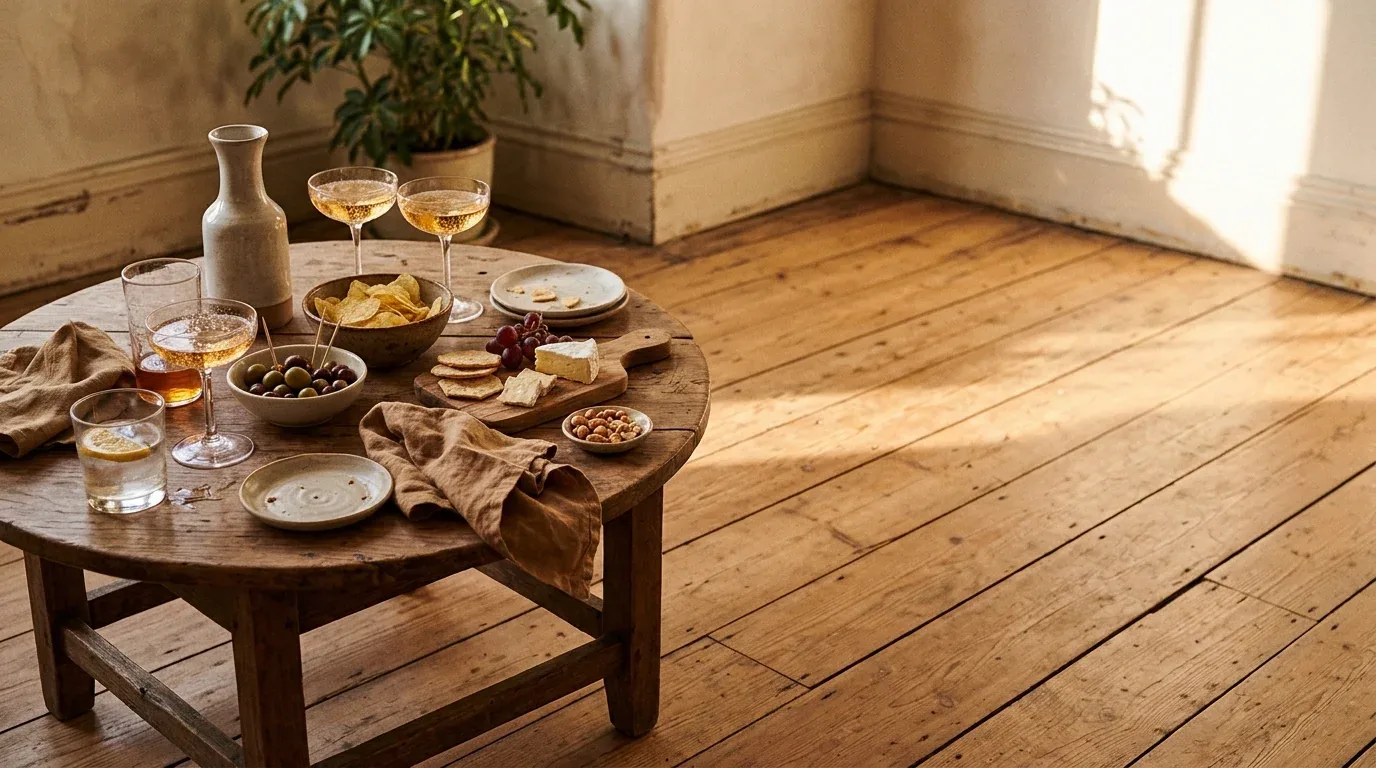
| Hold your drink | Keep one hand busy and sway | Mid-party, on the edge of the floor |
How to find the beat in a loud room
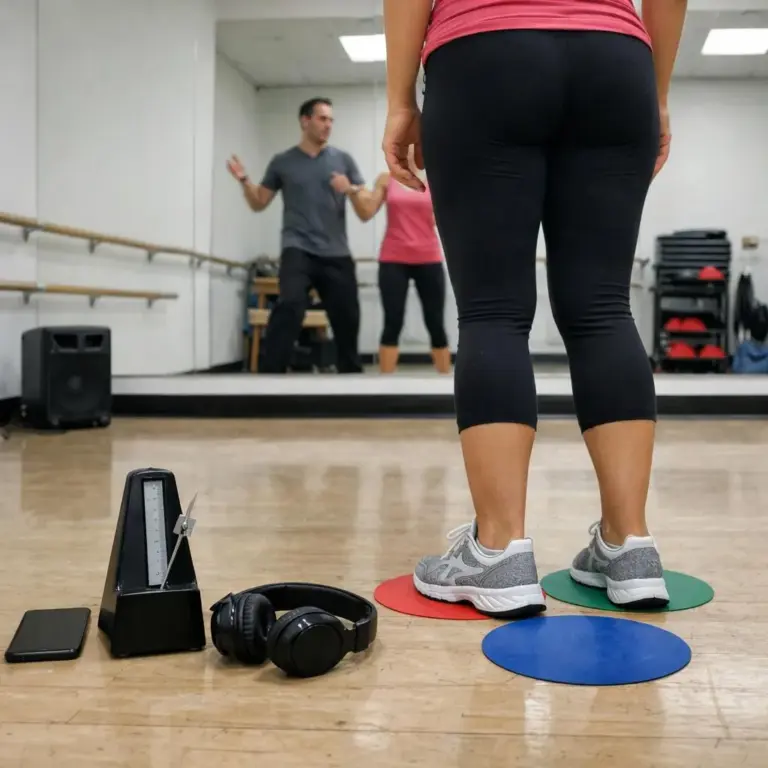
Listen for the drums or the bass, not the singer. Nod your head along for a few seconds before you move your feet. If you are near others who are moving, you can also match their timing. The people around you are an easy guide. If you often lose the beat, a few minutes with these rhythm exercises at home will help far more than you might expect.
Getting onto the floor
The hardest part is the first step. Try one of these approaches:
- Wait for a song you know. Enthusiasm covers a lot.
- Go with a friend. Agree to join for one song.
- Start on the edge. Sway beside the floor, then move in once you feel settled.
- Join a group circle. Everyone faces each other, which feels less exposed.
- Set a limit. Tell yourself that you can leave after one song. Most people stay.
Practice at home first
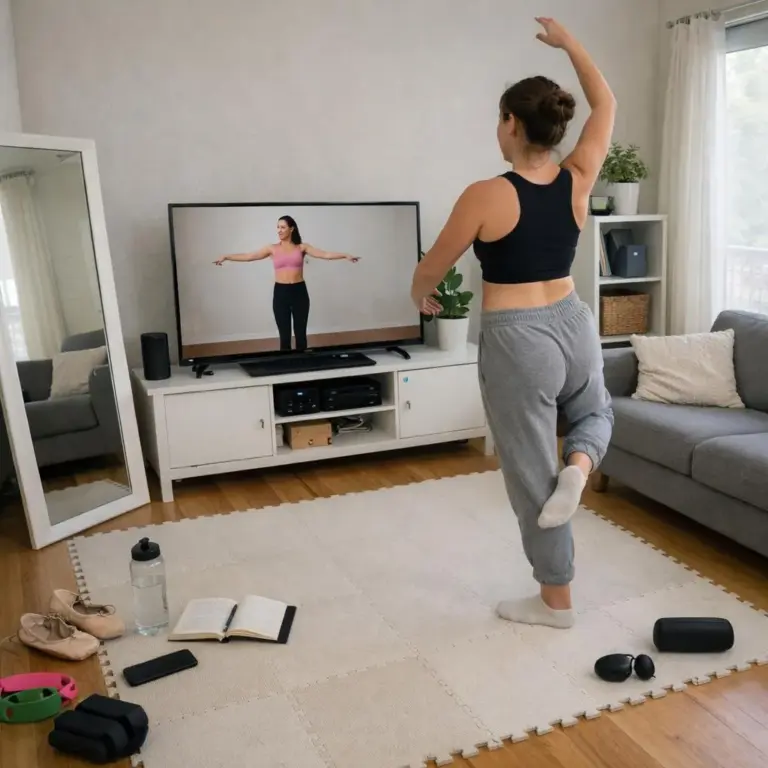
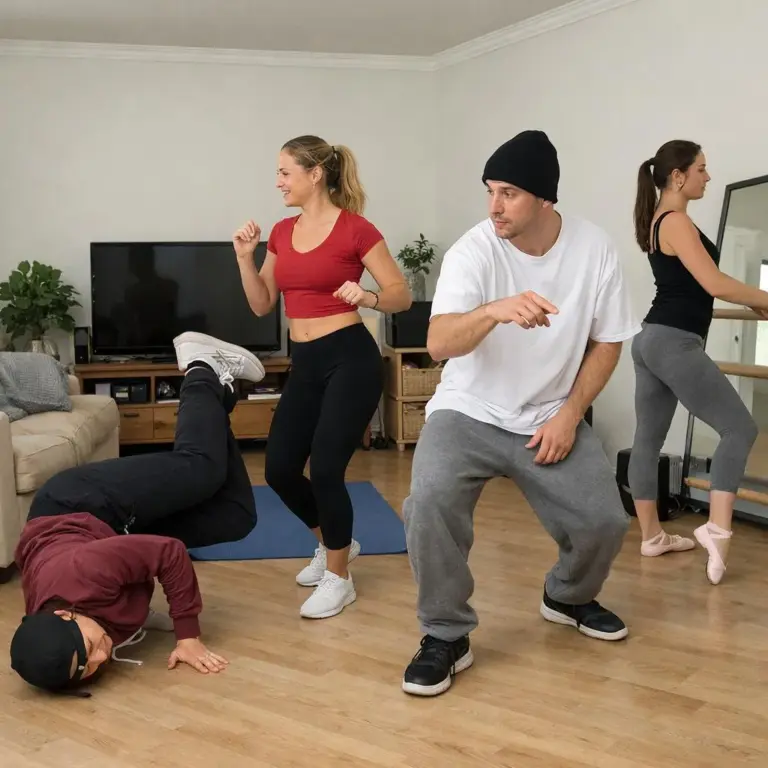
You will feel more confident if your body has done this before. Put on three songs in your kitchen and dance through them, using just the sway and step-touch. Practice with your eyes off your feet. A full-length mirror can help for a few minutes, but do not stay there too long. The goal is to feel comfortable, not to examine yourself.
For a more structured start, these home practice tips help you get more from a short session.
Dressing for it
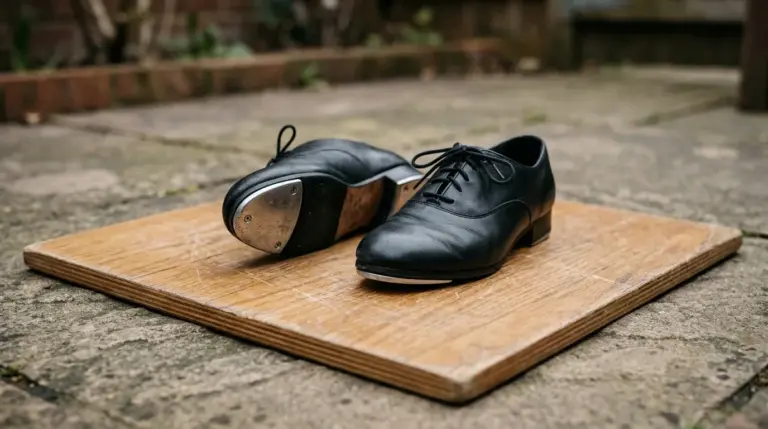
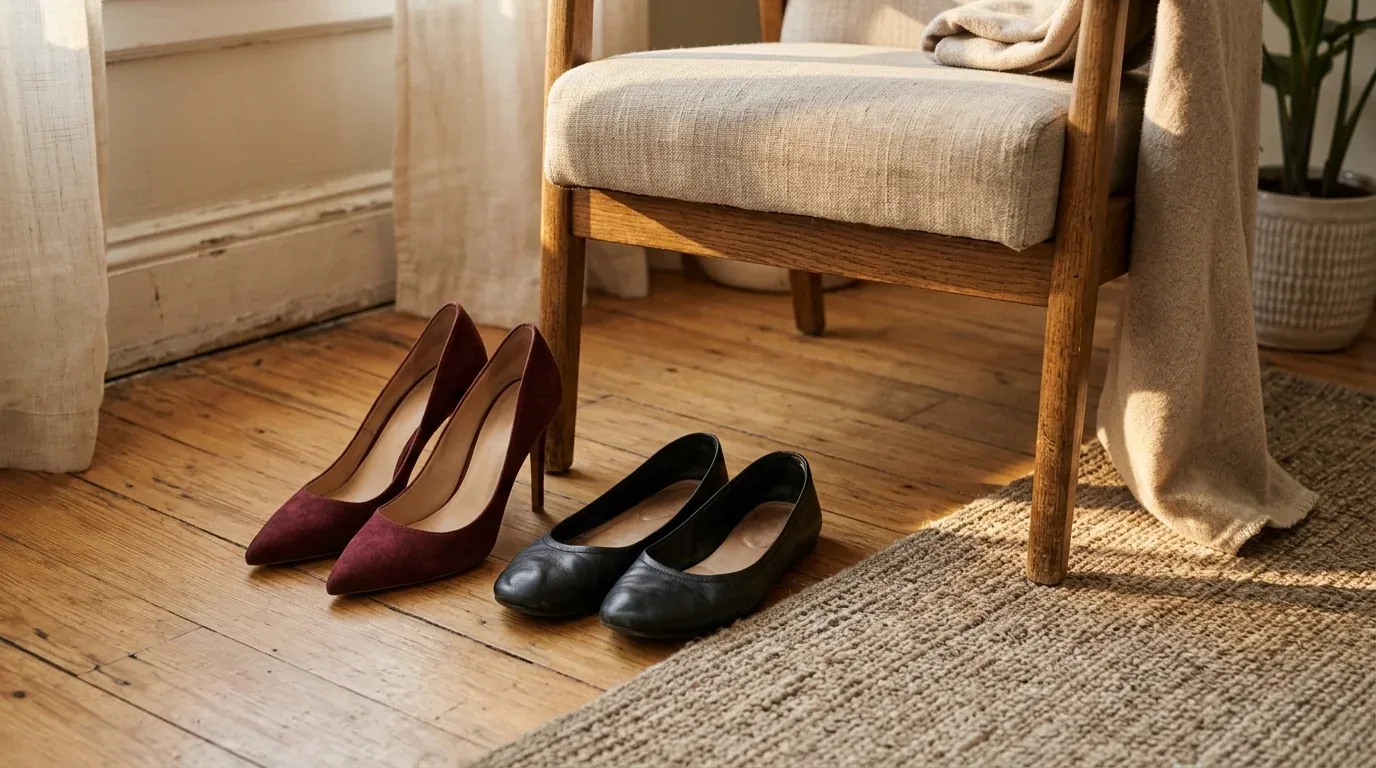
Choose shoes you can move in. Slippery soles and very high heels make even a simple step harder. If you are wearing heels, keep your steps small. Check that your clothes let you lift your arms, and leave anything loose or dangling in your bag. If you are planning for a bigger event, this guide on how to dance at a wedding covers slow songs and group dances too.
Dancing with a partner or group
If someone invites you to dance, you can stay with the same sway. Stand facing them, hold hands if you both want to, and step together. For a slow song, the classic hold is one hand on your partner’s shoulder or back with the other hand joined, stepping side to side. Do not worry about leading. Keep your steps small, and check that your partner is comfortable.
Quick answers
What if everyone is watching me?
They almost certainly are not. On a busy floor, people look at their friends or think about how they look themselves.
What if I really have no rhythm?
Rhythm is a skill you can practice. Start by nodding along to the music, then step on the same pulse.
Do I have to dance at all?
No. Standing and enjoying the music is fine. Dancing is an invitation, not a duty.
Stay comfortable through the night
Take breaks and drink water between songs. Watch for wet patches, bags, and crowded corners on the floor, since Better Health Channel lists floor conditions and nearby obstacles among the things that can contribute to dance injuries. If you get tired, sway instead of stepping. There is no rule that says you must stay until the last song, and leaving the floor for a while is perfectly normal. Going back for one more song at the end of the night is often the most fun anyway, because the room is relaxed and nobody is keeping score.
Your plan for next time
Practice the sway and step-touch during two songs this week. At the party, wait for a song you like, walk in with a friend, and stay for one track. If you enjoy it, you may want to learn more, and this list of dance styles to learn at home is a friendly place to start.

GenDance Wellness is maintained by the GenDance Editorial Team and publishes informational content about dance fitness, beginner learning, dance gear, and safer home practice.