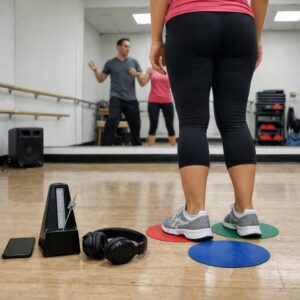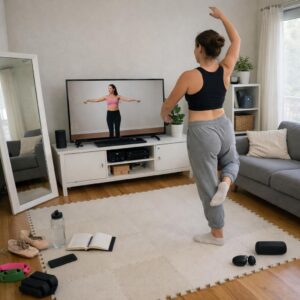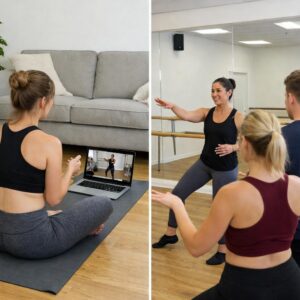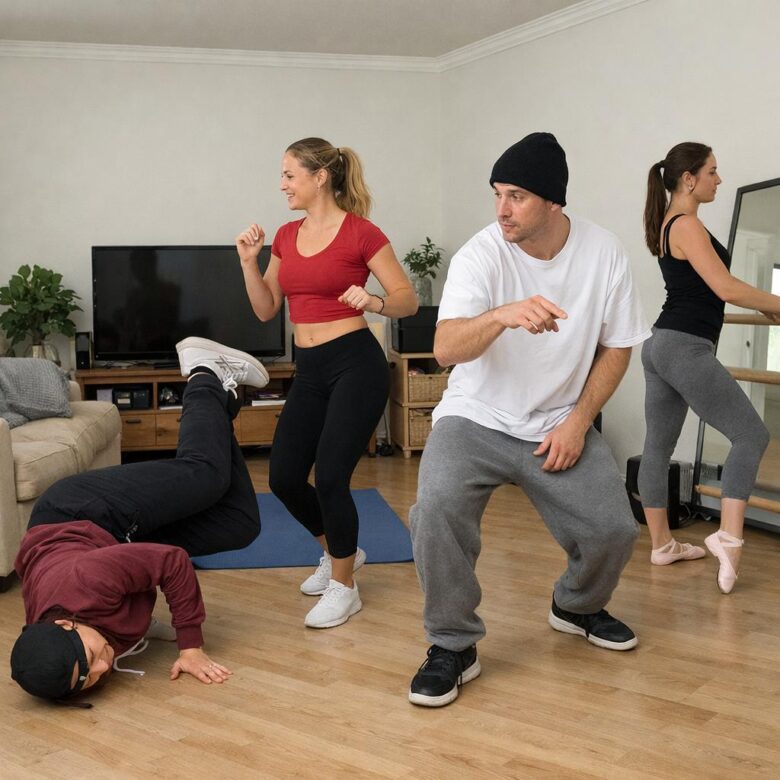
For a first at-home lesson, try hip-hop grooves, solo salsa basics, or a beginner line dance. Treat these as starting suggestions—not a ranking of which style is easiest or safest. Choose one short lesson based on the music you enjoy, then check whether its movements fit your room.
You can also start with a K-pop chorus, bachata basics, or standing contemporary exercises. The key is to choose beginner material rather than copy a finished performance.
Six options for your first home practice
Use the suggestions below to narrow your search. For your first session, leave out jumps, fast turns, and movements that take you close to furniture.
1. Hip-hop: start with grooves rather than choreography
Choose this option if you want to explore how you move to a beat. Search for a beginner foundations lesson that explains a bounce, weight shift, or individual groove before combining movements.
- First practice: Work on one groove to a slow track, then try changing its direction.
- Keep it manageable: Add arm movements only after you can repeat the lower-body pattern.
- Leave for later: Breaking power moves, tricks, and routines built around jumps.
2. Solo salsa: focus on timing and weight changes
If social dancing interests you, start your salsa practice with a solo beginner lesson. Follow that instructor’s timing system throughout the lesson rather than switching between tutorials.
- First practice: Repeat the basic step with spoken counts, then try it with music.
- Keep it manageable: Use small steps and check which foot holds your weight before the next step.
- Leave for later: Fast spins and partner combinations. Plan to learn connection and lead-and-follow skills with a partner and teacher.
3. Line dance: choose a short sequence
Try this option if you prefer a defined pattern to open-ended movement. Look for a lesson labeled absolute beginner, with a full walk-through before the music starts.
- First practice: Learn one section, pause, and repeat it before adding the next.
- Keep it manageable: Initially practice facing one direction; add direction changes once you remember the steps.
- Check before starting: Preview the entire routine for sideways and backward travel.
4. Bachata: begin with a basic-step lesson
Choose a solo beginner lesson if you want to try another social-dance option. Focus on the instructor’s foot placements and timing rather than copying dramatic styling.
- First practice: Rehearse the side basic and tap slowly.
- Keep it manageable: Leave the arms relaxed until the footwork feels familiar.
- Leave for later: Dips, deep backbends, and partner-led body movements.
5. K-pop choreography: learn a small excerpt
If a particular song motivates you, choose a beginner breakdown of a short chorus section—not the entire performance.
- First practice: Learn one eight-count phrase at reduced playback speed.
- Keep it manageable: Practice feet and arms separately, then combine them.
- Check the directions: Follow the tutorial’s instructions about left and right; do not assume every video is mirrored.
6. Contemporary: start with standing movement
For an expressive starting point, choose an introductory lesson using reaches, weight shifts, and simple standing phrases.
- First practice: Explore one short phrase without trying to match the instructor’s range of motion.
- Keep it manageable: Choose material that stays within your cleared area.
- Leave for instruction: Floor drops, demanding balances, large leaps, and acrobatic transitions.
Check your space, floor, and shoes
Clear loose objects and cords, move pets out of the practice area, and place your screen where you can see it without repeatedly twisting around. Walk through the planned steps before playing the music.
Do not judge a floor by its surface alone. Ausdance recommends sprung, semi-sprung, or cushioned dance floors and warns against dancing on concrete. Its guidance also distinguishes wooden boards from wood laid directly over concrete. Source: Ausdance’s safe dance floors guidance.
Grip matters as well as cushioning: the appropriate surface depends on the dance technique and how the foot interacts with the floor. Do not assume that a soft mat or a smooth surface is suitable for every movement. Source: Ausdance on dance-floor surfaces.
Wear properly fitted footwear appropriate to the activity. Johns Hopkins Medicine identifies poorly fitted shoes as one possible contributor to dance-related ankle sprains. Source: Johns Hopkins Medicine.
If you are unsure about your floor-and-shoe combination, ask a dance instructor to assess it before attempting turns or jumps. Buying a mat or new sneakers should not substitute for that assessment.
Choose a lesson that teaches, not just demonstrates
Preview the tutorial and look for:
- A full-body view with the instructor’s feet visible.
- Slow explanations of steps and weight changes.
- Clear counts and directions.
- Short sections you can pause and repeat.
- Beginner alternatives to jumps, turns, or floorwork.
Do not choose by price alone. For your first lesson, prioritize an explanation you can follow over production quality or a complicated final routine.
A simple practice plan
Warm up before dancing; Johns Hopkins Medicine includes warming up among its dance injury-prevention recommendations. Source: Johns Hopkins Medicine.
After your warm-up, try this learning sequence. It is a suggested structure, not an exercise prescription:
- Pick one task: A groove, a basic step, or one short phrase.
- Practice without music: Follow the instructor’s counts and check the sequence.
- Add music: Keep the same small section rather than restarting a long routine.
- Review one detail: If you record a clip, choose timing or step order to examine—not every aspect of your dancing.
- Write down the next task: For example, repeat the phrase without looking at the screen.
Stop rather than push through pain. Pain that worsens with activity, changes how you move, or wakes you at night warrants assessment by a medical professional. Source: Johns Hopkins Medicine’s dance injury warning signs.
Which style should you choose?
Start with hip-hop foundations for grooves, solo salsa or bachata for basic social-dance footwork, or line dance for a defined sequence. Try a K-pop excerpt if you have a song in mind, or a standing contemporary lesson if expression is your priority.
For the first session, set one modest goal: learn a small piece well enough to repeat it without constantly watching the screen. Add complexity later, and seek teacher feedback when a movement remains confusing.

GenDance Wellness is maintained by the GenDance Editorial Team and publishes informational content about dance fitness, beginner learning, dance gear, and safer home practice.