Start with a dance workout that teaches a few steps and repeats them. For your first sessions, choose straightforward footwork over fast choreography: step side to side, march to the beat, and add arm movements when you feel ready.
Dancing can count as aerobic activity and uses energy, but a workout’s name does not tell you how many calories you will burn. Effort, duration, and body weight matter. Source: CDC physical activity guidance.
Which beginner dance workout should you try?
Use these options as a starting menu, not a ranking of calorie burn. Preview a video before following it, and look for clear instruction, repeated combinations, and alternatives to jumps or turns.
Low-impact dance cardio: start with a few repeatable moves
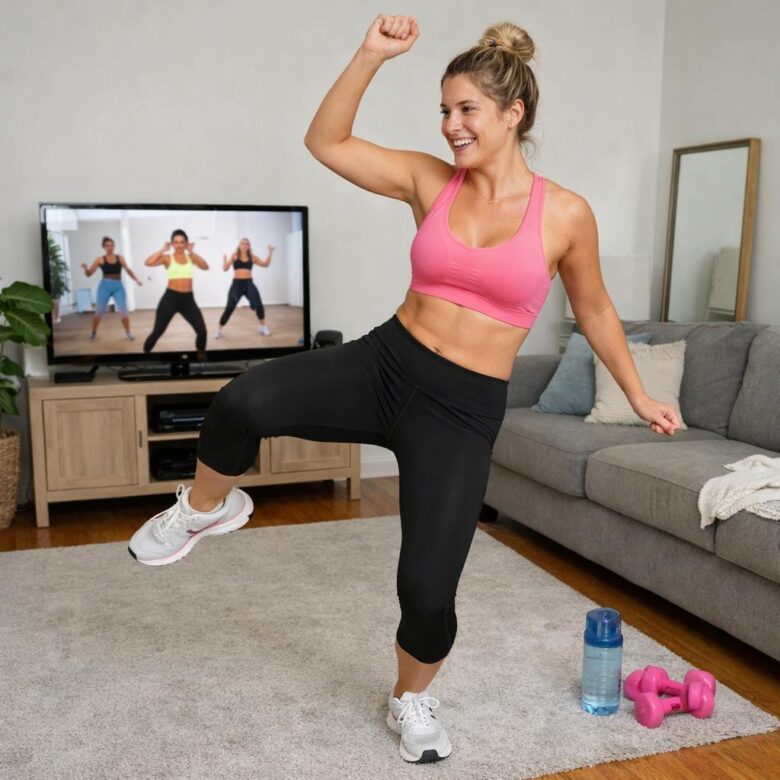
Choose this option if you want to keep the choreography simple. Look for a routine built around marching, step-touches, heel taps, and side steps, without jumping.
- Try first: Step right, bring your left foot beside it, then repeat to the left.
- Keep it manageable: Practice the feet alone before adding arm movements.
- Video search phrase: “Beginner low-impact dance cardio, no jumping.”
Latin-inspired dance cardio: choose a basic-step lesson
If you prefer Latin music, try a beginner Latin-cardio or Zumba lesson that explains the footwork before building combinations. Choose a fundamentals session rather than assuming every class with a beginner label will suit you.
- Try first: Alternate small side steps and marches to the music.
- Keep it manageable: Leave out spins and traveling combinations while learning.
- Video search phrase: “Beginner Latin dance cardio basic steps.”
Hip-hop-inspired cardio: focus on one short combination
Choose a basics-focused workout if you enjoy hip-hop music. For this starting plan, skip routines built around floorwork, deep drops, or rapid direction changes.
- Try first: Step side to side with a relaxed arm swing, then add alternating heel taps.
- Keep it manageable: Repeat one combination instead of trying to learn a full song immediately.
- Video search phrase: “Beginner hip-hop cardio standing only.”
How hard should you work?
Use the talk test rather than chasing a heart-rate number. At moderate intensity, you can talk but not sing. If you can say only a few words before pausing for breath, you are working at vigorous intensity. Source: CDC exercise intensity guide.
You do not need to reach moderate intensity immediately. Start slowly and build up; even a few minutes of movement is a useful beginning. Source: NIDDK activity guidance.
Pause a video whenever you need to watch a step or rest. There is no requirement to keep moving through every song.
A simple 15-minute starting routine
This is a suggested practice session, not a tested calorie-burning program. Shorten the dance section if needed, or spend the whole session practicing gently.
- 5 minutes: warm up. Begin with slow marching and small side steps. Gradually add comfortable arm movements.
- 5 minutes: practice your dance moves. Alternate step-touches, heel taps, and marches. Try each for about a minute, then repeat your favorites. Take breaks as needed.
- 5 minutes: cool down. Return to easy steps or slow walking and gradually reduce your pace.
The warm-up and cool-down follow the American Heart Association’s recommendation to allow 5–10 minutes for each, using a slower version of your activity. Source: American Heart Association.
Set up your space before pressing play
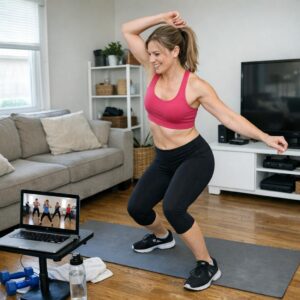
Clear furniture and other obstacles from your movement area. Check for spills, uneven surfaces, and damaged carpet. Floor conditions and nearby obstacles can contribute to dance injuries. Source: Better Health Channel dance safety guidance.
For aerobic dance, choose well-fitting footwear designed for the activity, with secure lacing, stability, and forefoot cushioning. Do not assume that any sneaker will suit every dance workout. Source: Better Health Channel aerobics guidance.
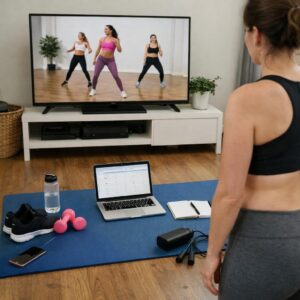
Place your screen where you can see the instructor without repeatedly turning around. Before starting, rehearse the widest step in the routine to check that you have enough room.
What is a realistic calorie expectation?
As a broad reference, the CDC lists approximately 165 calories for 30 minutes of dancing for a 154-pound person. That is not a prediction for a particular beginner video or the short practice routine above. The CDC notes that calorie use varies with body weight, and its table distinguishes activities by intensity. Source: CDC activity and calorie table.
For your first sessions, record the minutes you practiced, the steps you want to repeat, and whether the pace felt manageable. You can use those notes to choose your next workout without making a calorie target the goal.
Build up without rushing
Repeat a routine if you like it; you do not need new choreography every day. When you are ready for more activity, build gradually rather than making a large jump in duration or effort. Source: NIDDK tips for starting physical activity.
If you have a health condition that may affect exercise, ask a healthcare professional what type and amount of activity are appropriate. Source: NIDDK.
Stop and seek help right away for chest pain or pressure, extreme shortness of breath, dizziness, or feeling sick during activity. If dancing causes pain in your joints, feet, ankles, or legs, consult a healthcare professional about adjusting the activity. Source: NIDDK exercise warning signs.
For your next session, pick one style, preview one beginner routine, and practice a few moves. Let learning the steps—not matching the instructor’s speed—be your first goal.

GenDance Wellness is maintained by the GenDance Editorial Team and publishes informational content about dance fitness, beginner learning, dance gear, and safer home practice.