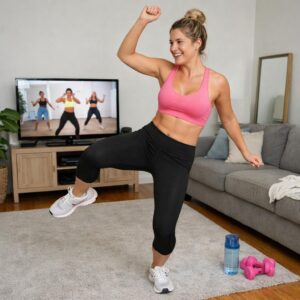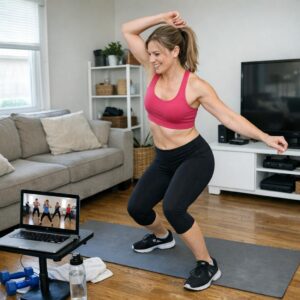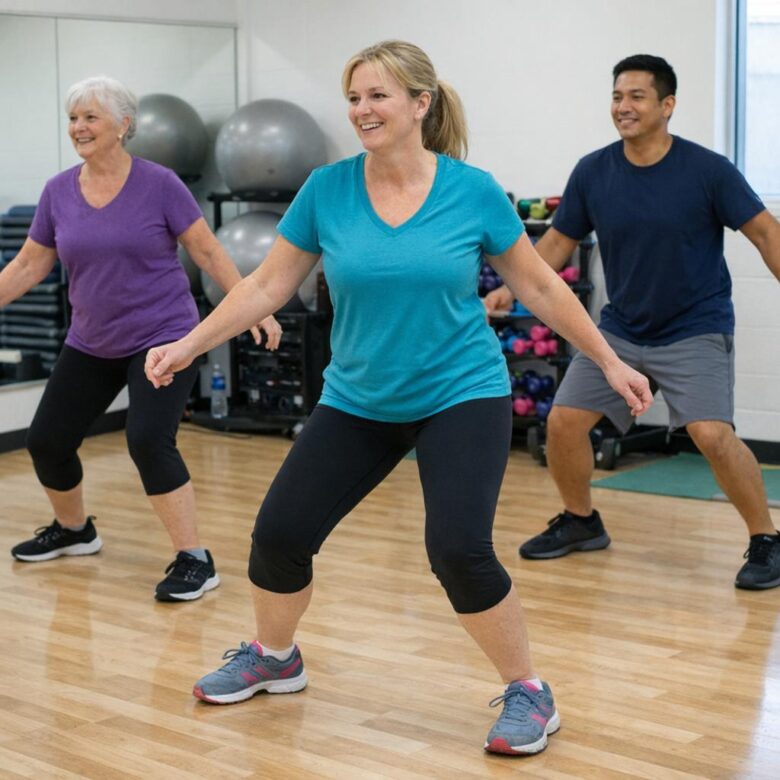
Start with a side step, bring the other foot in, and repeat in the opposite direction. Add music if you like. That simple step-touch is the starting point for the no-jump dance routine below—no choreography to memorize or fitness tracker to buy.
For this routine, keep at least one foot on the floor and leave out hops, jumps, and fast turns. That does not make the workout strain-free: unfamiliar steps, repetition, and speed can still contribute to dance injuries. Choose movements that match your abilities rather than trying to keep up with a video. Source: Better Health Channel dance safety guidance.
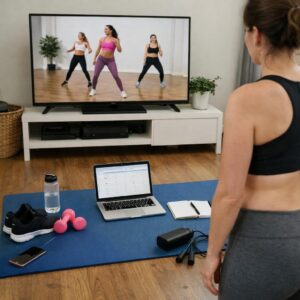
Set up your space before pressing play
- Clear the movement area. Move cords and nearby obstacles out of the way. Avoid wet, uneven, or damaged surfaces; hard flooring is also a recognized dance injury risk factor. Source: Better Health Channel.
- Choose footwear for the activity. Shoes should fit properly and suit the dance style. Do not assume that one type of walking shoe or cross-trainer is right for every dance movement and surface. Source: Better Health Channel.
- Preview a guided class. Look for no-jump demonstrations, clearly explained steps, and permission to pause. Skip routines that require fast pivots or complicated combinations before you have learned the basics.
Four beginner dance steps to practice
Try these suggested movements separately before linking them together. Use small steps at first and leave your arms relaxed while learning the footwork.
- Step-touch: Step right, then bring your left foot beside it for a light tap. Step left and tap with your right foot. Repeat.
- Heel digs: Place your right heel a short distance in front, with your toes pointing up. Return it, then switch feet.
- Side taps: Tap your right toes out to the side and bring them back. Alternate sides without traveling across the room.
- March with the music: Alternate lifting your feet just enough to clear the floor. There is no need for high knees or bouncing.
If the beat feels rushed, try one step every other beat or turn the music off while practicing. You do not have to add arm movements or match an instructor’s range.
A short home routine: allow about 15 minutes
This is a suggested practice sequence, not a tested training program. The American Heart Association recommends 5–10 minutes of warming up and 5–10 minutes of cooling down around aerobic exercise; allow more time if needed. Source: American Heart Association.
- First 5 minutes: Begin with slow marching and small step-touches. Gradually work toward your intended pace.
- Next 5 minutes: Do each of the four steps above for 30 seconds. Repeat the sequence, then finish with one minute of your preferred step. Pause when needed.
- Final 5 minutes: Return to slow step-touches and easy marching, gradually reducing your pace.
Only have 10 minutes? Use the time for easy step practice, gradually easing in and slowing down toward the end, rather than squeezing in a harder dance block. Short bouts of activity can contribute to your weekly activity total; they do not have to last a minimum of 10 minutes to count. Source: Physical Activity Guidelines for Americans.
Use breathing—not a calorie target—to check effort
At moderate intensity, you can generally talk but not sing. If you can say only a few words before pausing for breath, the effort is vigorous. The same movement can feel different to different people, so use your own response rather than the instructor’s pace. Source: CDC intensity guidance.
Easy practice is a reasonable place to begin. When the sequence becomes familiar, try adding a little time rather than changing the speed, steps, and arm movements all at once. Federal guidelines advise inactive adults to start with small amounts and increase activity gradually. Source: Physical Activity Guidelines for Americans.
When to stop or get individual guidance
Stop if a movement causes pain rather than repeating it to see whether it improves. If you have an existing injury, consult a clinician or physical therapist before starting; seek advice for pain that persists. A general dance routine is not a rehabilitation plan. Source: Better Health Channel.
Make the next session easy to start
Choose one repeatable cue, such as finishing work or taking a midday break. Keep the same four steps for your next session and note which ones you want to repeat or leave out. There is no need to learn a new routine every time.
Treat these sessions as one part of your activity week. Adults generally need at least 150 minutes of moderate-intensity aerobic activity weekly, plus muscle-strengthening activity on at least two days. A few short dance breaks are a starting point, not a complete fitness plan. Source: Physical Activity Guidelines for Americans.

GenDance Wellness is maintained by the GenDance Editorial Team and publishes informational content about dance fitness, beginner learning, dance gear, and safer home practice.