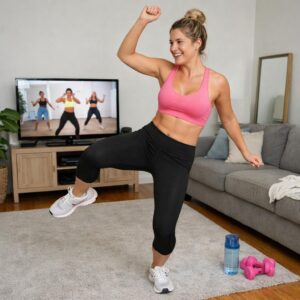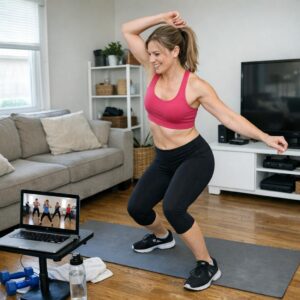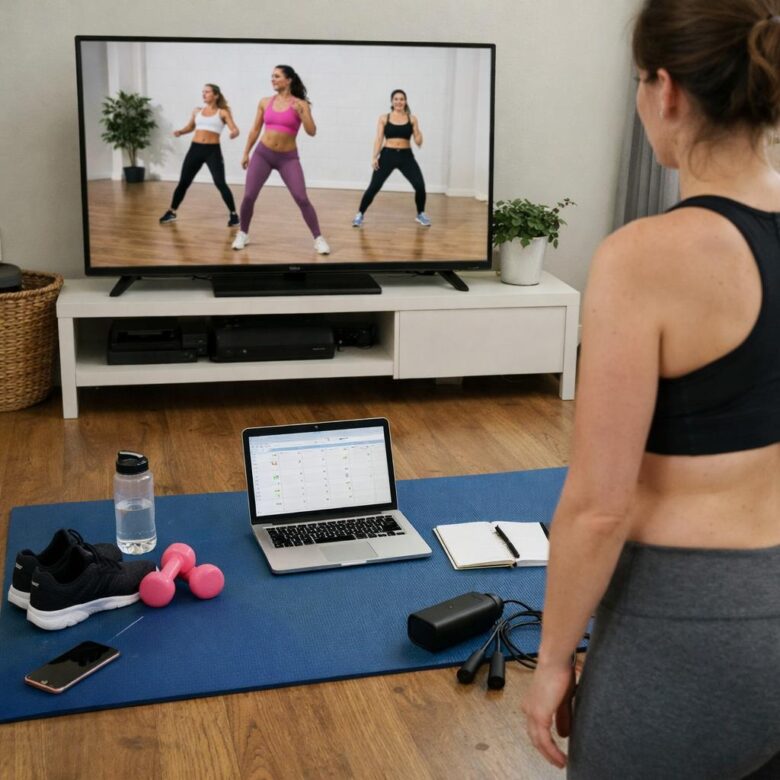
Start by reserving three dance sessions in your calendar: two for moving through familiar choreography and one for practicing steps. Choose the videos or playlists before the week begins, and leave the other days available for strength work and rest.
The schedule below is a planning example, not a prescribed training program. Shorten it to match what you can comfortably do now rather than trying to complete every minute from the start.
Set a weekly goal beyond the number of classes
For adults, the general activity target is at least 150 minutes of moderate-intensity aerobic activity or 75 minutes of vigorous activity each week, plus muscle-strengthening activity on at least two days. Strength work should cover all major muscle groups. Some activity is better than none, and you can build toward these amounts gradually. Source: Physical Activity Guidelines for Americans.
Dance can contribute to your aerobic activity, but the effort matters. A slow practice session with frequent pauses is different from continuous cardio choreography. At moderate intensity, you can talk but not sing; at vigorous intensity, you can say only a few words before pausing for breath. Source: CDC intensity guidance.
Use the sample week as a starting point, not as proof that you have met the weekly activity target. Count the minutes you actually spend at the relevant intensity, including other activities such as brisk walking.
A flexible seven-day dance workout schedule
Dance-session times below include an easy beginning and ending. If you are new to exercise, use the shorter option or shorten it further.
| Day | Suggested session | What to do |
|---|---|---|
| Monday | 20–30 minutes of dance | Choose familiar steps and aim for a manageable, moderate effort during the main section. |
| Tuesday | Strength work | Use a beginner full-body routine suited to your current ability. |
| Wednesday | 15–20 minutes of easy technique practice | Break down one short combination. Practice footwork first, then add arms if you want. |
| Thursday | Rest or optional easy movement | Leave this day unstructured rather than adding another demanding class. |
| Friday | 20–30 minutes of dance | Repeat Monday’s routine or choose another class with steps you can follow. |
| Saturday | Strength work | Return to your full-body routine and record what you completed. |
| Sunday | Rest | Review the week and choose next week’s sessions. |
Keep strength work separate from the assumption that any dance class is a full-body strength workout. Bodyweight exercises, resistance bands, and weights can all contribute to muscle-strengthening activity when the effort is sufficient. Source: CDC activity examples.
If you already exercise regularly, you might replace Wednesday’s practice with a longer dance session or add a fourth dance day. Those are options, not milestones you must reach. Keep space for rest: fatigue, significant soreness, and pain are reasons to skip a workout. Source: AAOS safe exercise guidance.
Give each dance session a clear structure
- Warm up for 5–10 minutes. Begin with a slower, easier version of the activity you plan to do. For dance, try marching, gentle side steps, and small versions of the upcoming movements. Source: American Heart Association.
- Choose one focus for the main section. Either keep moving through familiar choreography or pause to learn something new. For a 20-minute session, one example is five minutes of warming up, 10 minutes of dancing, and five minutes of cooling down.
- Finish with 5–10 minutes of easier movement. Gradually slow your steps rather than ending abruptly after the hardest song. Source: American Heart Association.
Preview unfamiliar videos before using them. Look for clear demonstrations, permission to pause, and alternatives to jumps or fast turns. Keep a simple fallback step—such as marching or a side-to-side step-touch—so you have something to do when a combination gets confusing.
Make the routine fit your room
- Check the movement area. Move loose objects and cords, then slowly test your widest planned steps and arm movements before playing the routine.
- Adapt traveling choreography. Practice in place when the room does not allow several steps forward, backward, or sideways.
- Choose footwear for the activity. Properly fitted, appropriate shoes matter; poorly fitted shoes are one factor associated with ankle sprains in dancers. Source: Johns Hopkins Medicine.
- Do not assume a purchase makes the space suitable. This plan does not recommend a compact exercise mat or a particular sneaker as a fix for tile or concrete. If you are unsure whether your setup suits jumps or turns, leave those movements out and seek advice from a qualified dance instructor.
Adjust the week using a simple workout log
After each session, write down four things: what you did, how long you danced, how hard it felt, and any discomfort. A paper calendar or phone note is enough.
Exercise guidance supports starting slowly and increasing frequency, duration, and intensity gradually. Source: AAOS. To make changes easier to track, try changing only one part of your plan at a time. For example, add one short song to Monday’s session while leaving the rest of the week unchanged. That is a planning suggestion, not a universal progression rule.
If the week felt too demanding, shorten the main dance sections or replace one with easy practice. If you missed a session, move on to the next planned workout rather than treating the calendar as a debt you must repay.
Know when to stop and get advice
Do not dance through pain that increases as you move, changes how you bear weight, or wakes you at night. These are reasons to consult a physician or physical therapist, ideally someone familiar with dance. Source: Johns Hopkins Medicine.
If you have an existing health condition or a history of heart disease, discuss vigorous exercise with your clinician before starting it. Source: AAOS.
Your first task: choose three dance time slots, save the routines you will use, and decide on a shorter version for busy days. After the first week, adjust the plan based on what you actually completed—not what an ideal week would look like.

GenDance Wellness is maintained by the GenDance Editorial Team and publishes informational content about dance fitness, beginner learning, dance gear, and safer home practice.