Zumba for Beginners: What to Expect in Your First Class
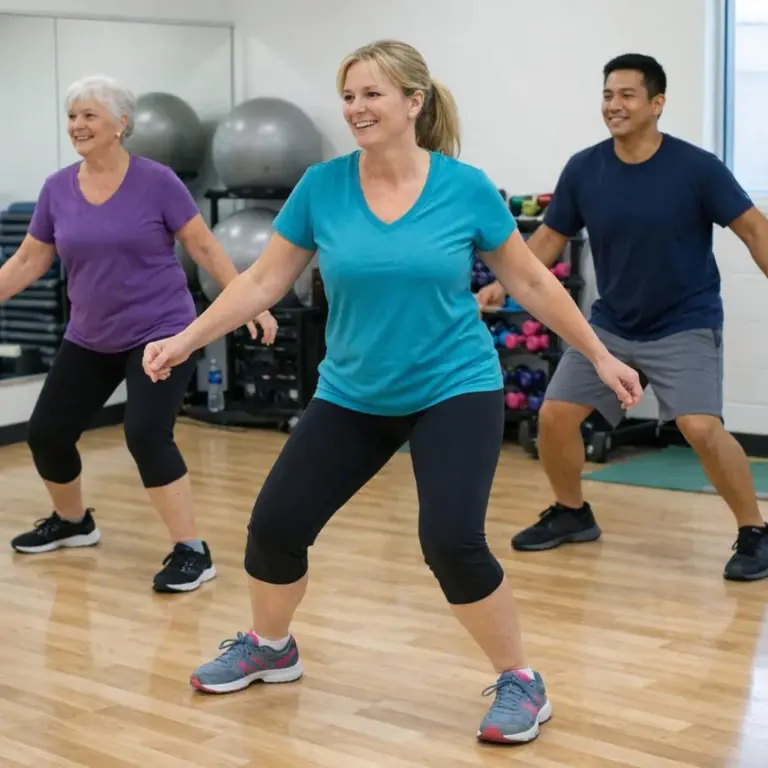
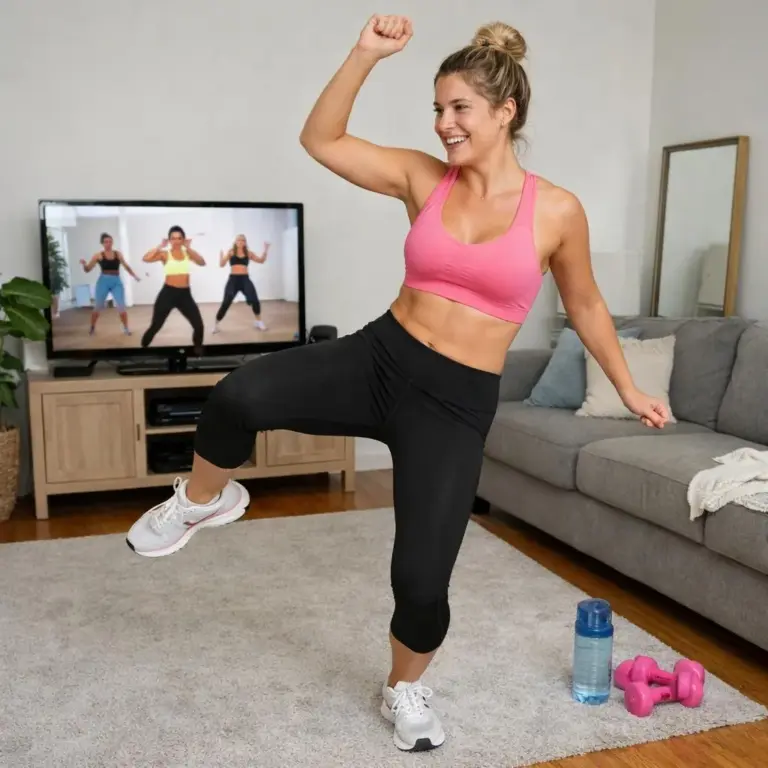
Zumba for beginners is simpler than it looks: a class is a dance fitness session led by an instructor, set to Latin-inspired and international music, where you follow along song by song. You do not need dance experience. Nobody grades your steps. If you lose the pattern, you can march in place until the next chorus, and that is a perfectly normal way to spend a first class.
This guide explains what happens in a session, how to prepare, and how to get the most out of your first few weeks.
How a Zumba class works
Classes vary by instructor, but many follow a similar shape. A slower warm-up song comes first. Then each song has its own short routine, with steps that repeat so you can catch on. Effort usually rises and falls across the class, and it ends with a slower cool-down track. Instructors often lead with gestures rather than words, pointing where to go next, so keep your eyes on them.
| Part of class | What happens | Beginner tip |
|---|---|---|
| Warm-up | Slow, simple movement | Copy at your own pace |
| Main songs | Repeating steps with a rising pace | Learn the feet first |
| Faster songs | Higher effort | Make the moves smaller |
| Cool-down | Slower movement and stretching | Stay for it, even if you are tired |
Basic steps you will meet
Many Zumba routines draw on Latin dance styles. You do not need to know them in advance, but recognizing the feel of each one will help.
- Merengue: A simple march on the spot with your hips moving naturally. It is the easiest step to fall back on.
- Salsa: A forward and back step in a quick-quick-slow rhythm.
- Cumbia: A side-to-side step with a sway, often with one foot dragging lightly.
- Reggaeton: A more grounded step with a low bounce.
If you want a head start, try these easy dance moves at home. The step-touch and grapevine appear in many dance fitness classes.
What to wear and bring
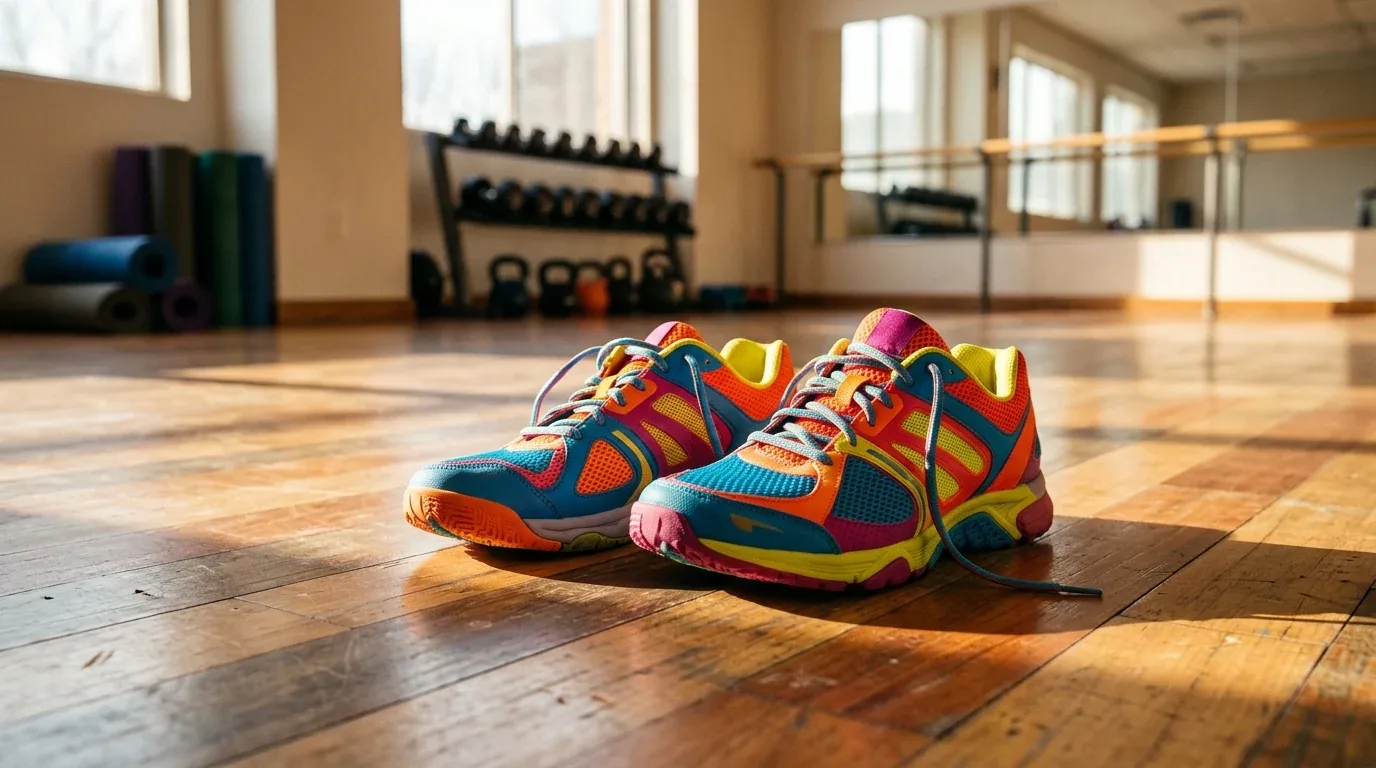
- Shoes: Choose well-fitting shoes suited to the movement. Better Health Channel advises that aerobic dance footwear should offer secure lacing, stability, and forefoot cushioning. Very grippy running soles can catch during pivots, so ask your instructor if you are unsure.
- Clothes: Breathable clothes you can move in.
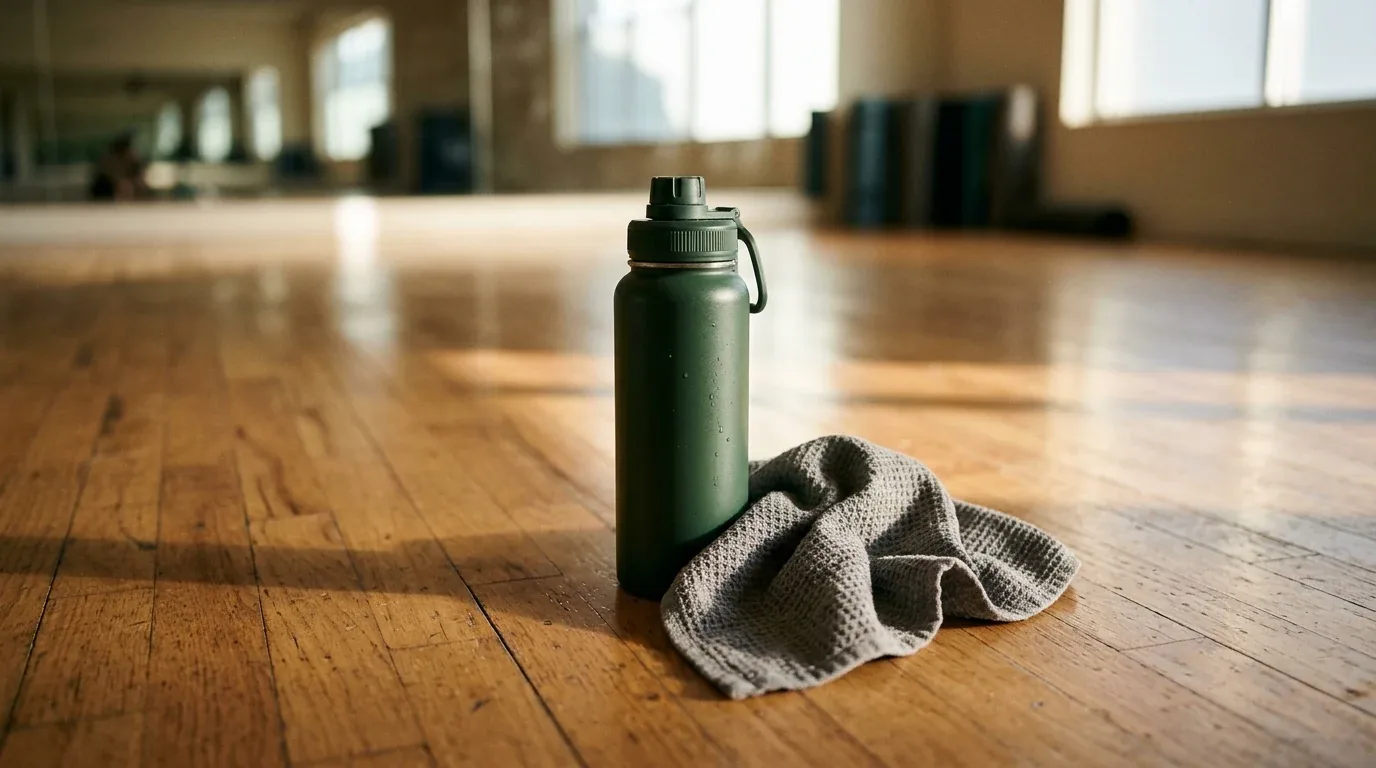
- Water: Bring a filled bottle and a small towel.
Our dance bag checklist shows what is worth packing and what can wait.
How to survive your first class
- Arrive early. Tell the instructor you are new. They may offer modifications.
- Stand in the middle. You can see the instructor and have people to follow when you turn.
- Follow the feet first. Ignore the arms until the footwork feels familiar.
- Go smaller when it gets hard. Skip the jump, or step instead of hop.
- Drink water and rest when you need to. You can step aside at any time.
- Come back at least twice more. The songs repeat in many classes, so it gets easier quickly.
In-person class or online at home?
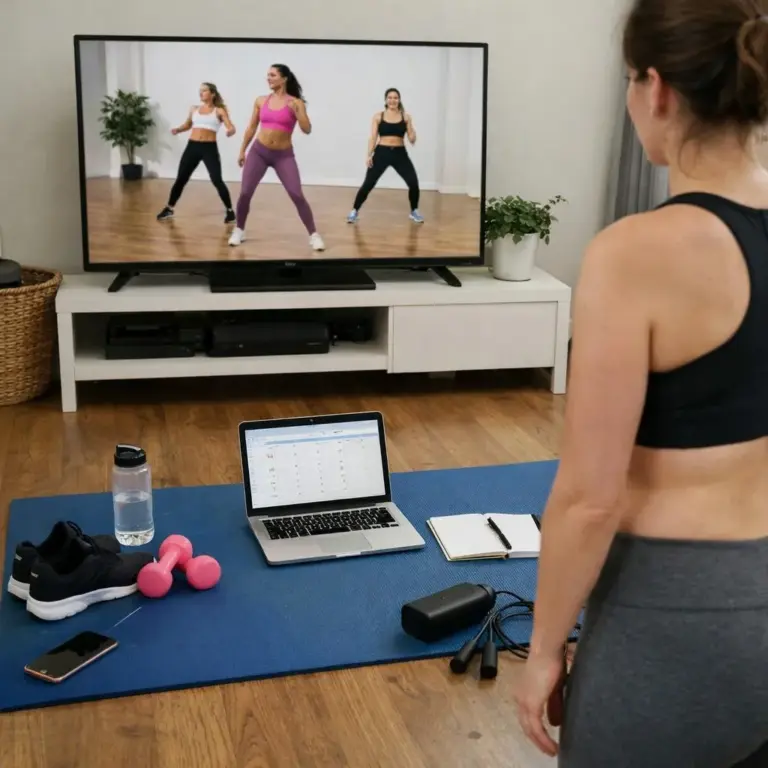
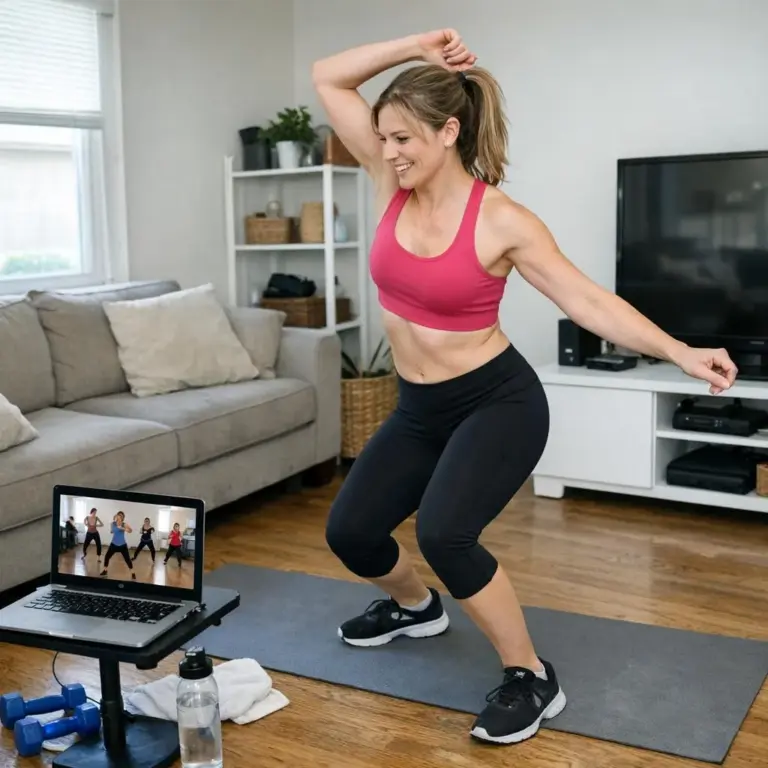
A live class gives you energy, a teacher, and a proper floor. At home, you can pause, repeat, and try it without anyone nearby. Both can work. If you try it at home, clear a space wide enough for side steps, and check your surface. Our guide to online dance fitness classes compares several options, including Zumba’s own service. Check current pricing and terms on the provider’s website, because they can change.
How hard is it, and will it help you lose weight?
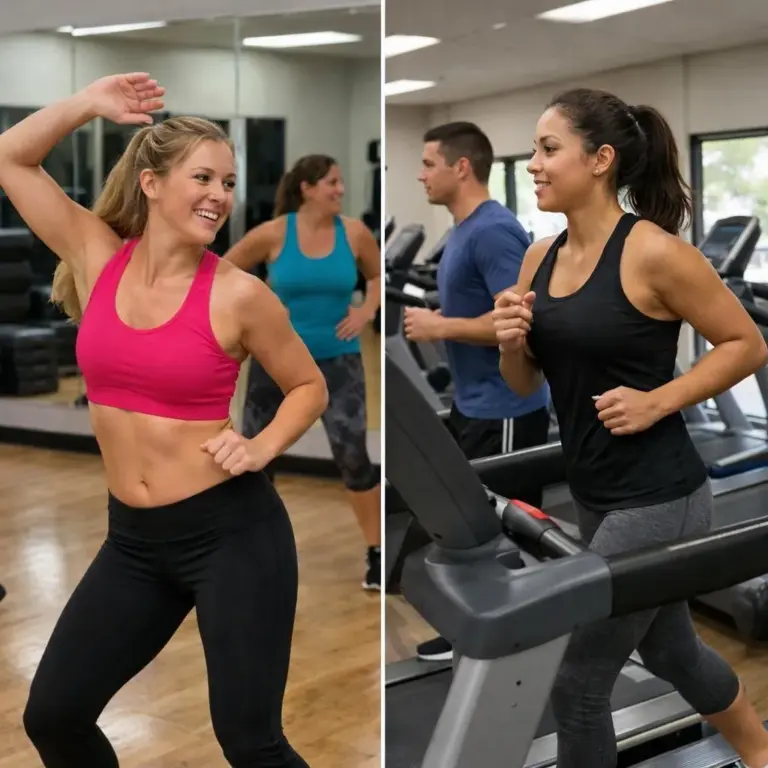
Effort depends on the class and on you. The CDC’s talk test is a useful guide: at moderate intensity you can talk but not sing. As for weight, a class can add to your weekly activity, but no workout guarantees weight loss, and calorie numbers quoted for a class are rough estimates that vary from person to person. This comparison of dance fitness and traditional cardio looks at that more closely. A more useful first goal is simply going regularly.
Making it easier on your body
- Replace jumps with a step.
- Keep turns slow, and lift your heel a little so your knee is not twisting on a planted foot.
- Rest during the fastest songs if you need to.
- Skip any step that hurts.
Look for gentler formats if you need them. Some instructors offer lower-intensity classes for active older adults or beginners. If you have a health condition, an injury, or are pregnant, ask a healthcare professional what is appropriate before you begin.
Common questions
Do you need to be able to dance?
No. Classes are designed for mixed levels, and following along imperfectly is expected.
How often should a beginner go?
One or two classes a week is a sensible start. Build up gradually, and leave time for recovery.
Will you feel embarrassed?
Possibly for the first ten minutes. Most people are too busy following the instructor to look at anyone else.
Getting more from class over time
After a few classes, try adding the arms on the songs you know best while keeping the footwork simple on the rest. You can also ask the instructor for the name of a step that keeps confusing you, then practice it for a few minutes at home. Trying different instructors can help too, because each one has a different style, pace, and song list. If one class feels too fast or too complicated, that may be about the fit rather than your ability. Keep a short note of which classes you enjoyed, so you can plan your week around them.
Your next step
Find a beginner-friendly class near you or preview one online, and commit to three sessions. Judge it after the third, not the first. By then you will know some of the songs, and you will be able to tell whether you enjoy it.

GenDance Wellness is maintained by the GenDance Editorial Team and publishes informational content about dance fitness, beginner learning, dance gear, and safer home practice.