Your first dance shoes can either help you improve faster-or teach you bad habits from day one.
For beginners, the right pair is not about looking professional; it is about balance, control, comfort, and protecting your feet while you learn the basics.
Whether you are starting ballroom, salsa, swing, ballet, or social dancing, beginner-friendly shoes should support movement without fighting against it.
This guide explains what to look for before buying, from sole type and heel height to fit, flexibility, and when it is worth investing in a better pair.
What Makes Beginner Dance Shoes Different from Regular Shoes?
Beginner dance shoes are built for movement control, not just comfort. Regular sneakers often grip the floor too much, which can strain your knees during turns, while everyday flats may slide unpredictably and offer little arch support. A proper beginner dance shoe gives you enough traction to feel safe, but enough glide to pivot without fighting the floor.
The biggest difference is the sole. Many ballroom, salsa, and swing dance shoes use suede or split soles because they help with balance, foot articulation, and smoother weight transfer. For example, a new salsa student wearing running shoes may feel “stuck” during basic turns, while a low-heel suede-sole dance shoe makes rotation easier and reduces unnecessary twisting.
- Flexible construction: helps the foot point, bend, and roll naturally.
- Secure fit: straps, laces, or elastic reduce slipping inside the shoe.
- Dance-specific support: cushioning is placed for repeated steps, spins, and pressure changes.
Beginner shoes also tend to have moderate heel heights and stable bases, which matters if you are still learning posture and timing. When comparing options on Zappos or a dancewear retailer, check the return policy, width options, and whether the shoe is designed for indoor studio floors. The right pair may cost more than casual shoes, but the benefit is better control, safer practice, and fewer bad habits from compensating for poor footwear.
How to Choose Dance Shoes by Style, Sole Type, Fit, Heel Height, and Support
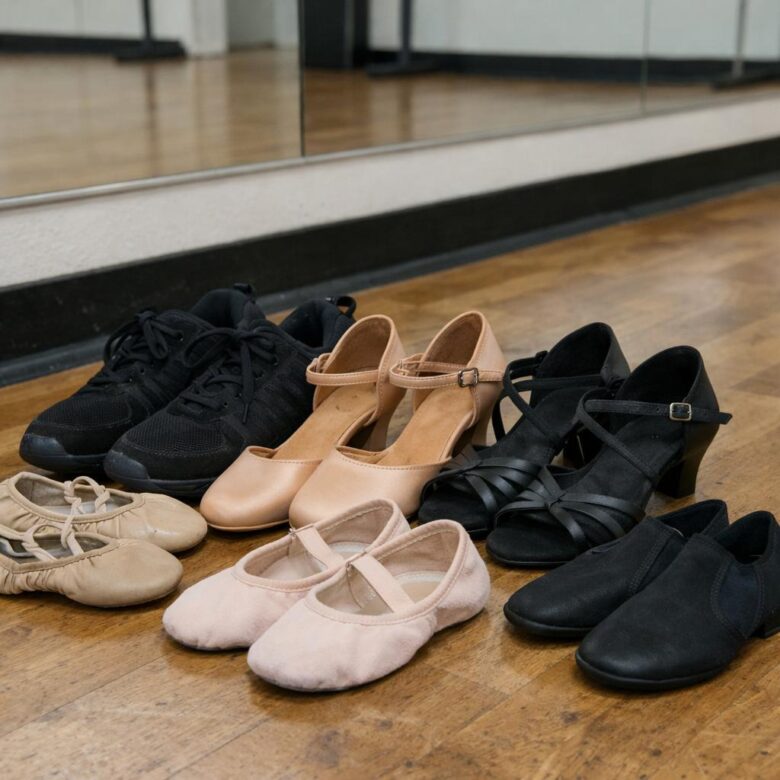
Start with the dance style, because the wrong shoe can make basic steps harder and increase strain. Ballroom and Latin beginners usually need flexible shoes with a suede sole, while hip-hop dancers often do better with supportive dance sneakers. Ballet, jazz, salsa, swing, and tap each require different traction, toe movement, and shock absorption.
Sole type matters more than many beginners realize. Suede soles give controlled glide on studio floors but need maintenance with a suede shoe brush; rubber soles offer grip for fitness dance classes but can stick too much for turns. If you practice at home, check whether your flooring is wood, tile, or marley before buying dance shoes online.
- Fit: Snug is good; painful is not. Your toes should lay flat without sliding forward.
- Heel height: Beginners usually do best with low heels, around 1 to 2 inches, for better balance.
- Support: Look for cushioned insoles, arch support, and ankle stability if you train often.
A real-world example: a beginner salsa student may feel more secure in a 1.5-inch flared heel with a suede sole than in a narrow 3-inch heel, even if the taller option looks more “professional.” Comfort affects confidence, and confidence affects timing.
Before paying, compare sizing charts, return policies, and customer reviews on platforms like Amazon or specialist dancewear stores. If you have flat feet, plantar fasciitis, or past ankle injuries, consider removable orthotic insoles or ask a dance teacher which brands offer better support for your foot shape.
Common Beginner Dance Shoe Buying Mistakes That Cause Pain, Slipping, or Poor Technique
One of the biggest beginner mistakes is buying dance shoes in the same size as street shoes without checking the brand’s sizing chart. Dance shoes should feel snug, not painfully tight, because extra space can make your foot slide forward during turns and create blisters under the toes.
Another common problem is choosing the wrong sole for the floor. A rubber sneaker sole may feel safe at first, but it can grip too much on studio flooring and strain your knees, while a worn suede sole can become too slippery if it is not cleaned with a proper suede sole brush.
- Buying for looks first: Thin straps, very high heels, or narrow toe boxes can cause pressure points during a full class.
- Ignoring return policies: When ordering from platforms like Amazon or dancewear retailers, check whether worn shoes can be exchanged after an indoor fitting.
- Skipping floor type: Ballroom, salsa, ballet, jazz, and tap shoes are built for different surfaces and movement patterns.
A real-world example: many new salsa students buy fashion heels because they look similar to Latin dance shoes, then struggle with balance because the heel placement is wrong. A proper beginner Latin shoe usually has better arch support, a stable heel, and a flexible sole that helps with weight transfer.
Before paying the final cost, try both shoes on at the end of the day when your feet are slightly swollen. If you use orthotics or gel pads, test them during the fitting, not after the first painful lesson.
Closing Recommendations
The right beginner dance shoe should make practice feel safer, steadier, and more enjoyable-not distract you with pain, slipping, or poor support. Choose based on the dance style you’ll train most often, then prioritize fit, flexibility, sole type, and comfort over appearance.
- Best choice: a well-fitted pair designed for your dance floor and movement style.
- Avoid: shoes that pinch, slide off, feel too stiff, or lack grip control.
- Smart takeaway: invest in reliable beginner shoes now, and your confidence, technique, and consistency will improve faster.

Dr. Adrian Miles is a movement wellness specialist focused on dance fitness, online dance learning, and healthy body movement. He creates practical content to help readers improve coordination, confidence, flexibility, and overall well-being through accessible dance-based routines.