Your best dance space might be hiding in the corner of your bedroom.
You don’t need a spare room, sprung floor, or wall of mirrors to train effectively at home. With the right setup, even a small apartment can support safe practice, clean technique, and consistent progress.
The key is choosing gear that protects your body, saves space, and actually fits the way you move. A compact floor solution, smart mirror placement, reliable sound, and a few storage tricks can transform tight square footage into a focused home dance studio.
This guide breaks down the essential equipment for small spaces-what’s worth buying, what to skip, and how to arrange it so your home studio feels practical instead of cramped.
Small-Space Dance Studio Essentials: What Gear You Actually Need at Home
A good home dance studio setup for small spaces starts with safety, not fancy equipment. The three essentials are shock-friendly flooring, a clear practice zone, and a reliable way to see or record your movement. If you live in an apartment, this matters even more because hard floors can stress your knees and annoy downstairs neighbors.
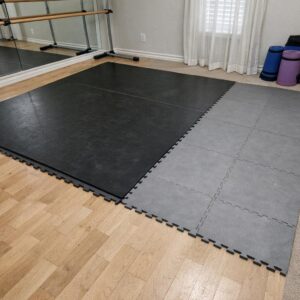
For flooring, a portable Marley dance floor or interlocking foam underlayment with a vinyl surface is a smart investment. Avoid dancing directly on tile, concrete, or thick carpet; they can cause slipping, sticking, or poor turns. A real-world example: a 6×6-foot practice area is enough for ballet barre work, jazz drills, K-pop choreography, or online dance classes without rearranging your entire room.
- Mirror option: Use a wall-mounted acrylic mirror or a rolling mirror if you rent.
- Audio setup: A compact Bluetooth speaker like JBL Flip gives better timing than phone audio.
- Training support: A portable ballet barre or sturdy chair works for balance and conditioning.
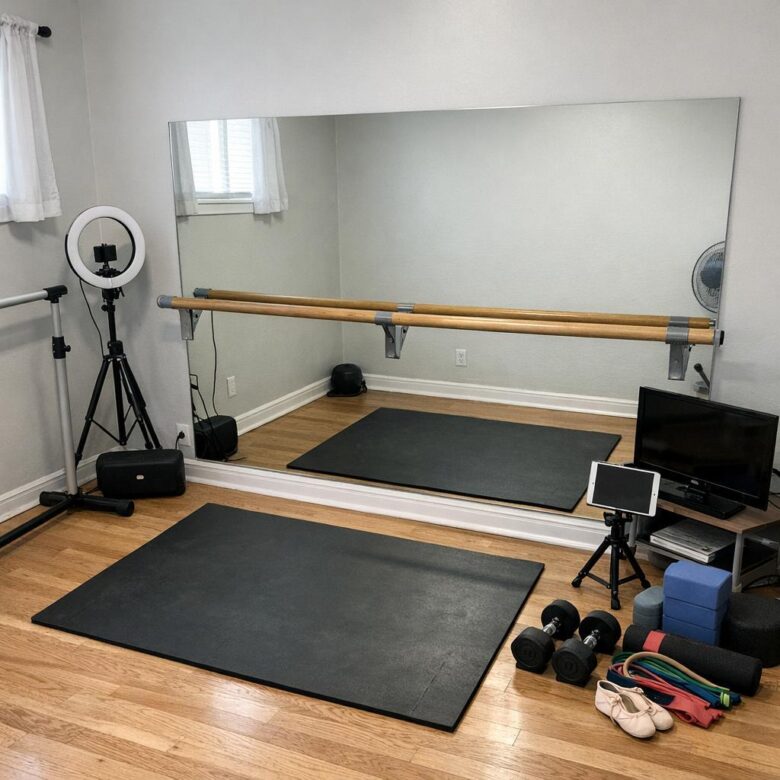
Good lighting and video tools are underrated. A small ring light and a phone tripod help you record clean practice videos for feedback, auditions, or virtual coaching on platforms like Zoom. In my experience, dancers improve faster when they can review posture, arm lines, and weight shifts instead of relying only on how movement feels.
Keep the setup simple: floor, mirror, sound, lighting, and storage. That is the core gear that delivers the most benefit without turning your bedroom or living room into a crowded equipment zone.
How to Set Up a Safe, Functional Home Dance Studio in a Small Room
Start by clearing a dedicated dance zone, even if it is only 6 by 8 feet. Move sharp furniture, low lamps, and rugs that can slide, then check your range of motion with basic turns, kicks, and floorwork before buying extra home dance studio equipment.
The biggest safety upgrade is the floor. If you are dancing on tile, concrete, or hardwood, use portable dance flooring, interlocking foam underlayment, or a roll-out Marley dance floor to reduce joint impact and improve traction. For example, in a spare bedroom, a 6-foot roll of Marley over foam tiles can create enough space for ballet barre work, jazz drills, or online dance classes without permanent installation.
- Flooring: choose shock-absorbing, non-slip materials instead of dancing directly on hard surfaces.
- Mirror placement: use a wall mirror or shatter-resistant mirror panels where you can see alignment from head to foot.
- Lighting and tech: place a ring light, phone tripod, or tablet stand away from your movement path.
For training, mount a portable ballet barre or use a sturdy freestanding model if you rent your home. A Bluetooth speaker, such as the JBL Flip, is useful because clear sound helps with timing, especially in small rooms where laptop speakers can feel weak.
Good ventilation matters more than people think. In real home setups, small rooms heat up fast, so a quiet fan, open window, or compact air purifier can make longer practice sessions more comfortable. Keep cables taped down, store gear vertically, and leave one clear exit path at all times.
Common Home Dance Studio Mistakes That Waste Space, Money, or Limit Movement
One of the biggest mistakes is buying gear before measuring the actual dance area. A portable ballet barre, full-length mirror, speaker system, and dance floor tiles may all sound essential, but in a small apartment they can quickly turn a practice space into clutter.
A real-world example: I’ve seen dancers order large glass mirrors for a bedroom studio, then realize the door swing and closet access made them unusable. Before spending money, use painter’s tape or a room planner like RoomSketcher to mark the floor space for turns, jumps, and arm extensions.
- Choosing the wrong flooring: Practicing on carpet can restrict footwork, while concrete or tile increases impact on joints. A roll-out marley dance floor or foam-backed vinyl is often a smarter investment.
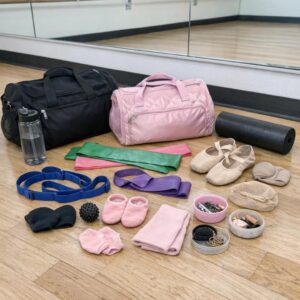
- Overloading the room with equipment: Resistance bands, yoga blocks, ankle weights, and storage bins are useful, but only if they have a dedicated place.
- Ignoring lighting and camera angles: Poor lighting makes online dance classes, audition videos, and self-review harder, even with a good phone or tripod.
Another costly mistake is buying cheap mirrors that warp movement lines. If wall-mounted mirrors are outside your budget, a stable shatter-resistant acrylic mirror panel can be safer than a bargain full-length mirror leaning against the wall.
Finally, avoid placing speakers, barres, or storage units along your main movement path. In a compact home dance studio setup, open floor space is more valuable than extra accessories.
Closing Recommendations
A small home dance studio works best when every choice supports safe movement, consistency, and quick setup. Start with the essentials that protect your body and improve practice quality, then add upgrades only when your space and routine justify them. If you are deciding what to buy first, prioritize flooring, clear space, a mirror or camera setup, and reliable audio before decorative extras. The goal is not to recreate a full studio at home-it is to build a practical space that removes friction, helps you train more often, and makes each session feel focused, comfortable, and worth returning to.

Dr. Adrian Miles is a movement wellness specialist focused on dance fitness, online dance learning, and healthy body movement. He creates practical content to help readers improve coordination, confidence, flexibility, and overall well-being through accessible dance-based routines.