Dance Routine for Beginners: How to Build Your First One
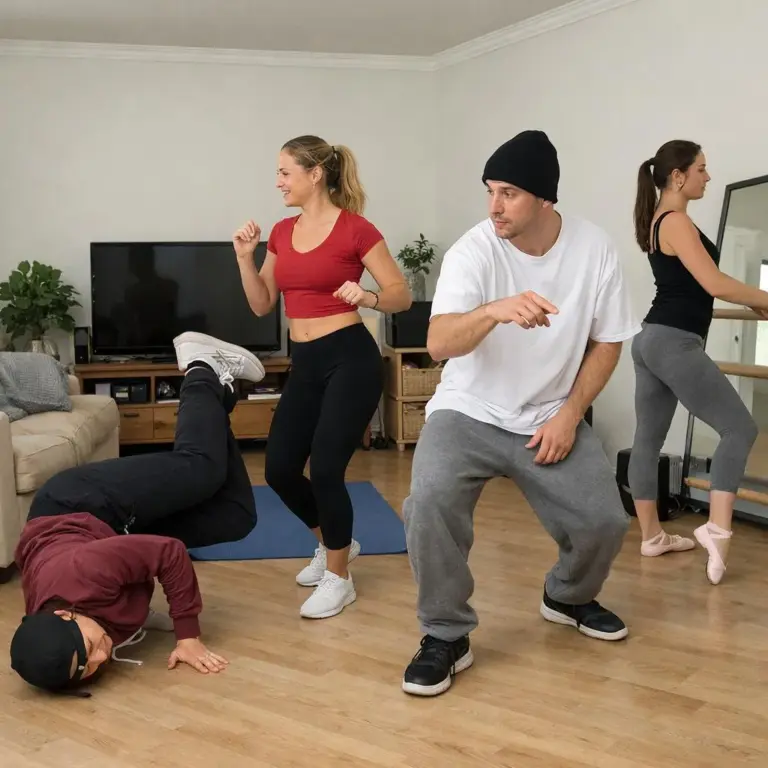
A good dance routine for beginners is short, built from moves you already know, and repeated until you can do it without thinking. Forty-eight counts of music is plenty for a first attempt. That is roughly thirty seconds of a mid-tempo song, and it is long enough to feel like real dancing.
You do not need to be a choreographer. The method below works with any style, and it treats a routine as a small stack of eight-count blocks that you can learn one at a time.
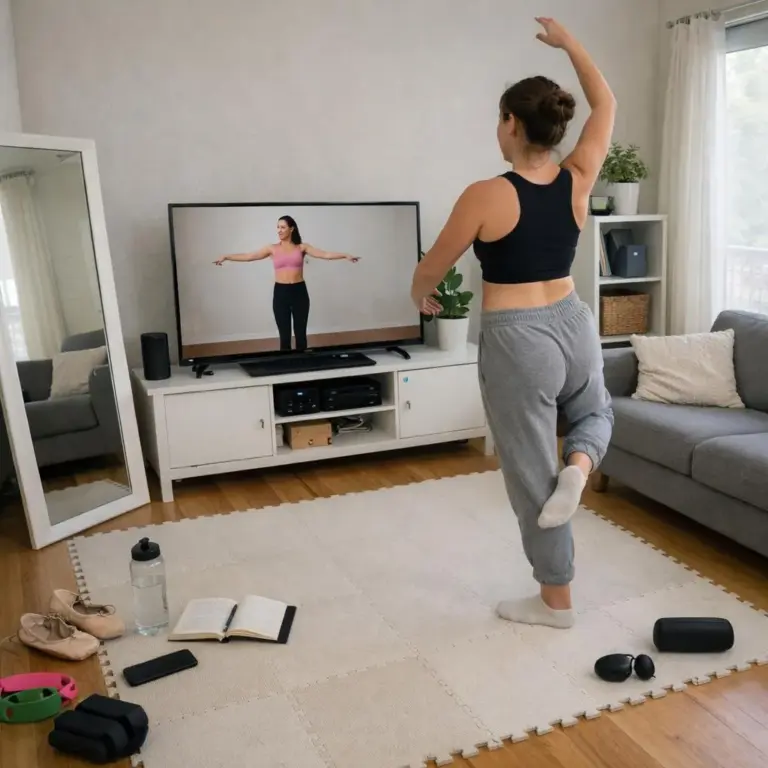
What you need before you start
- A clear area with room to take two or three steps in any direction.
- Three or four moves you can already do, such as the step-touch or grapevine. If you need some, start with these easy dance moves.
- A phone to play music and to record yourself later.
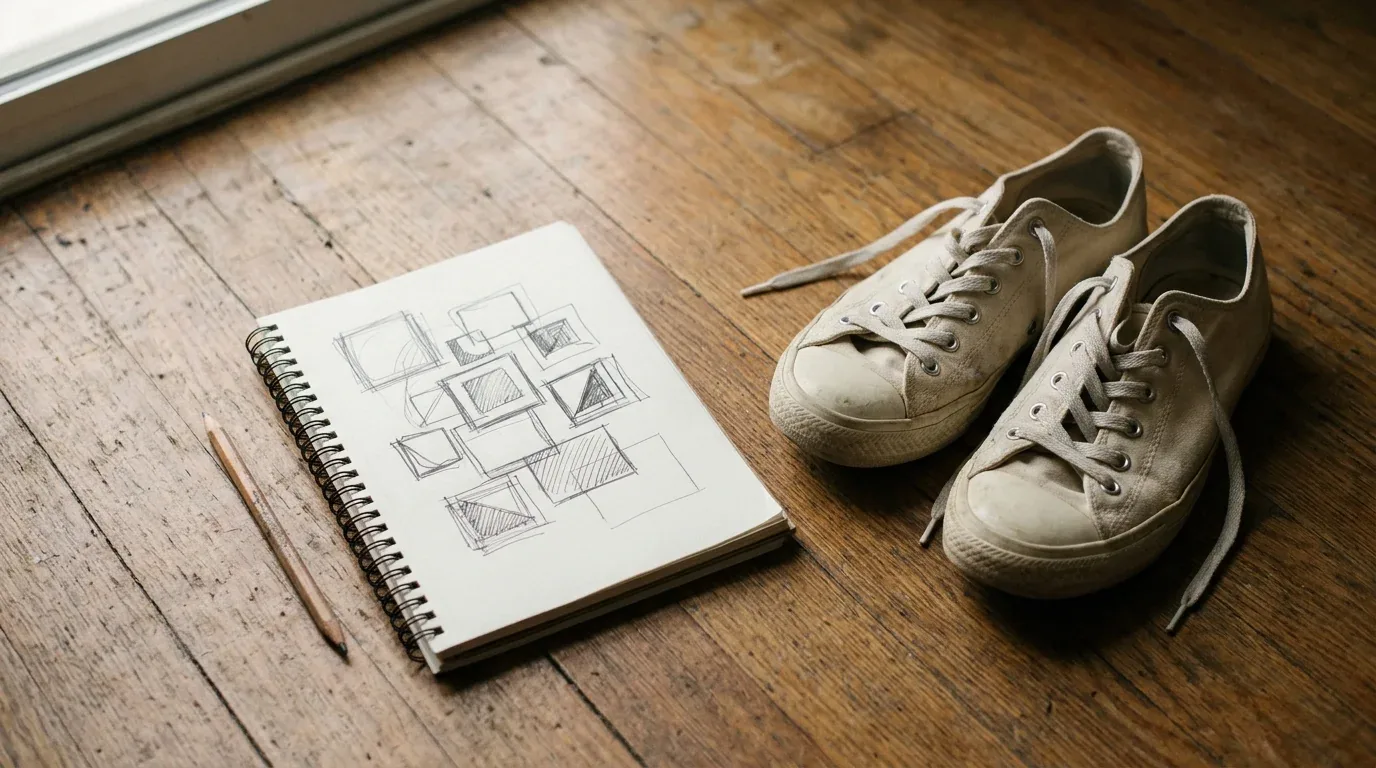
- A notebook, because a routine you do not write down tends to change by the next day.
Step 1: Choose a song you can count
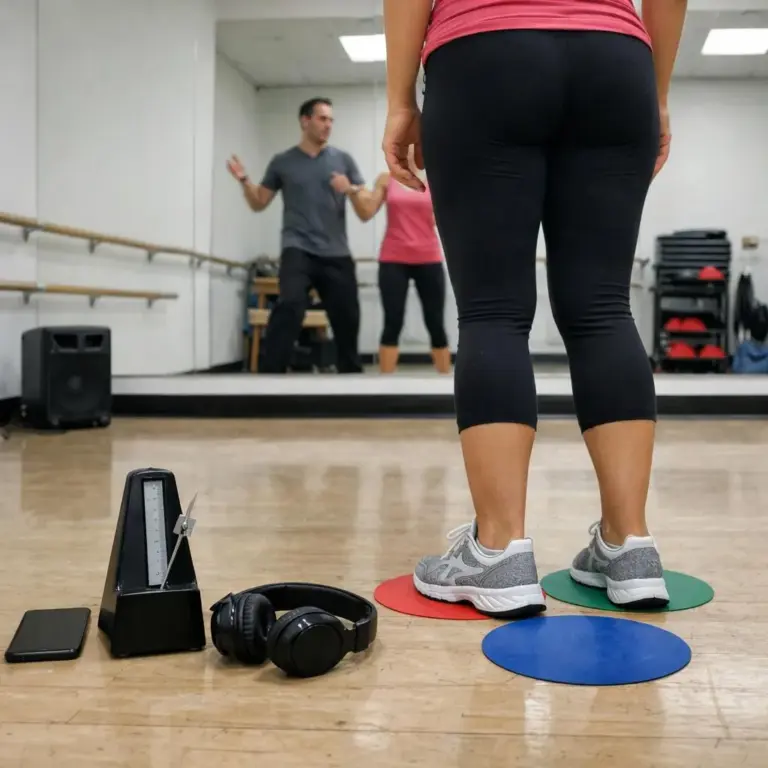
Pick a song with an obvious, steady beat and few tempo changes. Clap along for a full verse. If you can keep clapping without drifting, it is a good choice. Songs with a clear drum pattern are much easier than ballads, where the pulse can be hard to find. These rhythm drills will help if counting feels difficult.
Step 2: Map the music in blocks of eight
Most pop songs fall into phrases of eight counts, and those phrases group into larger sections. Count “1, 2, 3, 4, 5, 6, 7, 8” over the music and notice when the song seems to reset. Choose a section of the song, often the chorus, and mark six blocks of eight. That is your canvas.
A quick warning: not every song fits neatly. If the count keeps falling out of step with the music, choose another track for now.
Step 3: Fill the blocks with moves
Give each block one idea. Do not try to change steps every two counts. A plan like the one below is easy to remember and still looks like a routine.
| Block | Move | Idea to keep in mind |
|---|---|---|
| 1 | Step-touch, right and left | Start small, face front |
| 2 | Step-touch with claps | Add one detail |
| 3 | Grapevine right, then left | Travel sideways |
| 4 | Heel digs | Stay in one spot |
| 5 | Box step | Change the shape |
| 6 | Side taps, finish with a pose | End on count 8 |
Notice the pattern: blocks one and two are nearly the same. Repetition is what makes a routine look intentional, so do not be afraid of it.
Step 4: Work on the joins
The hard part of a routine is rarely the moves. It is the gap between them. Practice the last two counts of one block with the first two counts of the next, slowly and without music. Ask yourself which foot is free. If block three ends with your weight on the wrong foot, change the last step instead of forcing the transition.
This kind of focused work is covered in more depth in these beginner dance practice tips. The short version is to fix one join at a time, then return to the full sequence.
Step 5: Practice in layers
- Walk it. Mark the steps with no music and no effort.
- Count it. Say the counts aloud while you move.
- Play it slowly. Use a slower version of the song if your app allows it.
- Play it at full speed. Expect to lose a step or two the first time.
- Add style. Only now should you think about arms, face, and energy.
A simple practice schedule
This is a suggestion, so adjust it to your week. Short sessions on separate days usually feel better than one long attempt, and they leave time for rest.
| Session | Focus | Time |
|---|---|---|
| 1 | Choose the song, map the counts, write the plan | 15 minutes |
| 2 | Learn blocks one to three | 15 minutes |
| 3 | Learn blocks four to six | 15 minutes |
| 4 | Practice the joins | 10 minutes |
| 5 | Run it with music and record it | 10 minutes |
Warm up before you dance. The American Heart Association suggests a warm-up and cool-down of 5 to 10 minutes each around aerobic exercise, using a slower version of the activity.
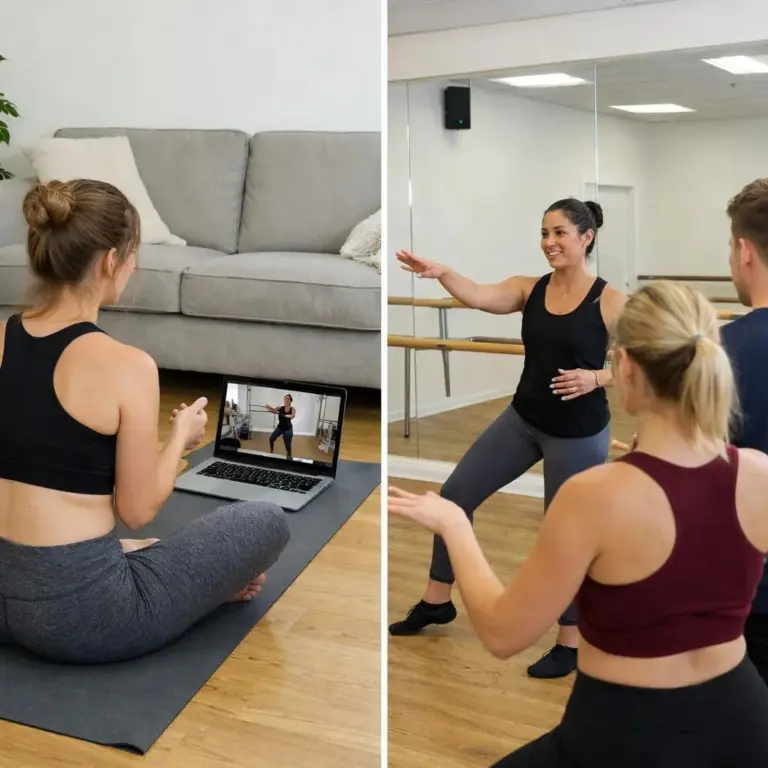
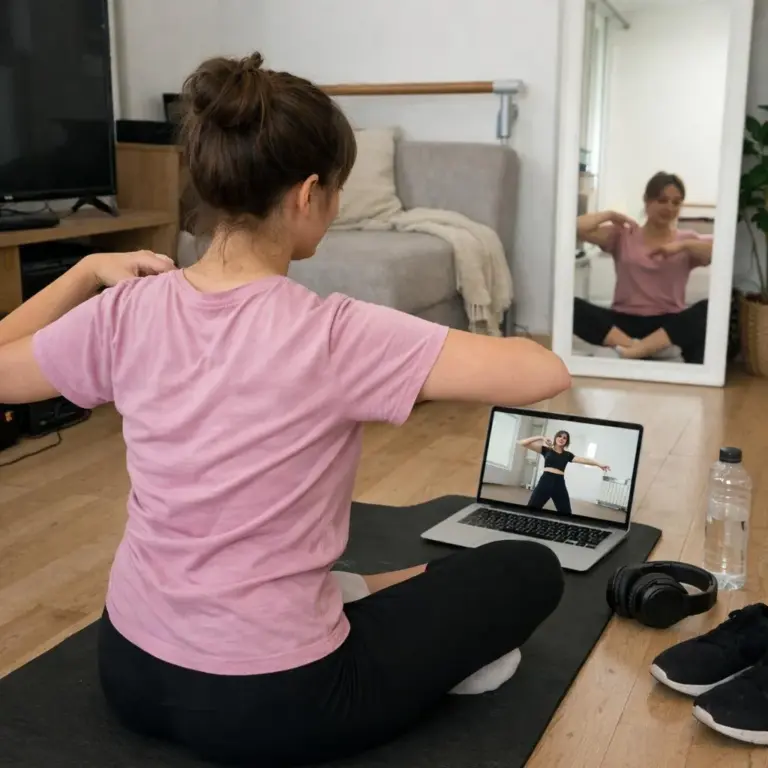
Check your routine on video
Film one run with your whole body in the frame, including your feet. Watch it once for a single question, such as “Am I landing on the beat?” Trying to judge everything at once tends to feel discouraging and is not very useful. Most beginners notice two things: they move less than they thought, and they rush the ends of phrases. Both are easy to adjust.
What to do when you get stuck
- You keep forgetting a block. Give it a nickname, such as “travel left,” and say the names aloud.
- It feels too fast. Halve the number of steps in a block. Two slow step-touches can fill eight counts.
- It looks stiff. Bend your knees a little more and let your shoulders move.
- You are bored. Keep the moves and change the direction you face.
Choosing moves that fit your space
Think about your room before you plan any travel. If you only have two steps of space, swap the grapevine for a side tap and keep the same counts. Your routine should fit the floor you practice on, or you will spend every run avoiding the coffee table. When you know where the routine will be performed, such as a living room or a party, rehearse in a similar amount of space. Mark your start and end points with tape if that helps you stay in the same place.
Keep building
Once you can dance your six blocks without watching a screen, add two more or start again with a new song. If you want some direction, this list of the best dance styles to learn at home can help you choose what to study next. Your first routine does not need to impress anyone. It only needs to be yours, and repeatable.

GenDance Wellness is maintained by the GenDance Editorial Team and publishes informational content about dance fitness, beginner learning, dance gear, and safer home practice.