Start with the studio’s dress code, then choose clothes you can move in without adjusting them. Before buying dancewear, ask whether your existing workout clothes and shoes are acceptable for the first lesson.
Check three things before getting dressed
- Clothing: Is there a required uniform, or can beginners wear workout clothes?
- Footwear: What exact shoes should you bring? Are socks or bare feet permitted?
- Class activities: Will you work on the floor, dance with a partner, or need any additional equipment?
Do not assume a ballet class requires a full uniform. For example, Ballet Austin recommends—but does not require—a leotard and tights for its adult ballet classes. That is one studio’s policy, not a rule for every school. Source: Ballet Austin’s adult class FAQs.
A simple first-class outfit
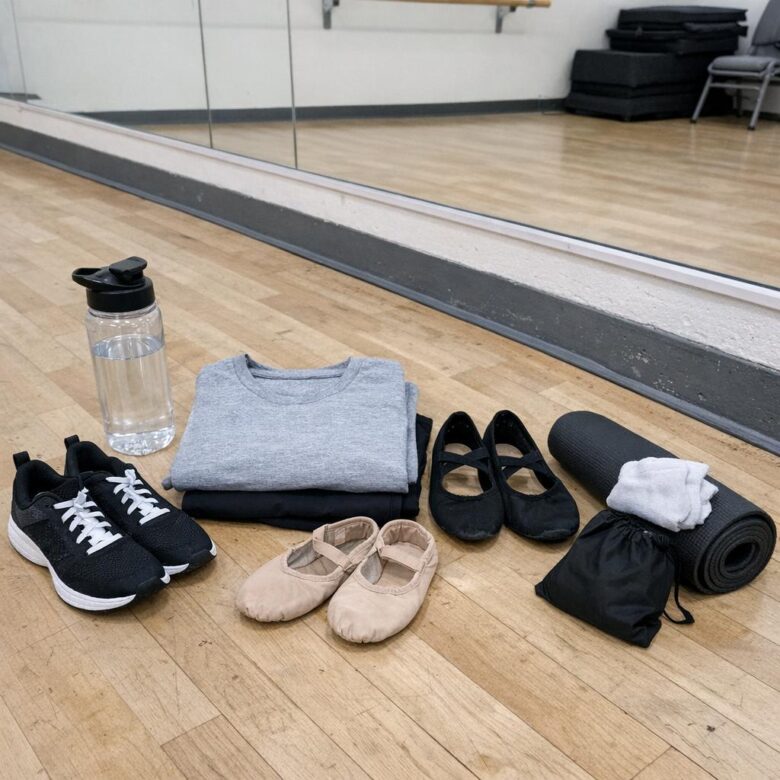
If the studio allows general workout clothing, try this starting combination:
- Top: A lightweight T-shirt or tank that stays where you want it when you raise your arms.
- Bottoms: Stretch leggings, joggers, or shorts that let you bend comfortably. Keep hems off the floor.
- Undergarments: Choose familiar options, including a sports bra if you use one for exercise.
- Layer: Pack a light sweatshirt or long-sleeve shirt you can remove.
You do not need to make every item skin-tight. Ballet Austin’s general adult-class guidance includes comfortable, loose-fitting clothes, with class-specific instructions taking priority. Source: Ballet Austin’s clothing guidance.
Do a quick movement check
Before leaving home, raise your arms, bend your knees, step sideways, and sit down. Check whether your waistband slips, your sleeves restrict movement, or your clothing gives you less coverage than you want. Swap anything that needs repeated adjustment. Skip stiff jeans if they limit these movements; save unfamiliar outfits for another day.
Match footwear to the class—not just the outfit
Use the following as questions to ask the instructor, rather than a shopping list:
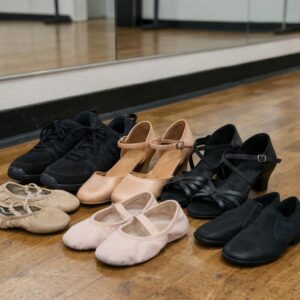
- Ballet: Ask which ballet slippers are required and whether there is an approved first-day alternative.
- Hip-hop: Ask whether your clean sneakers meet the studio’s shoe policy.
- Jazz or contemporary: Confirm the footwear rather than assuming you will dance barefoot.
For example, Ballet Austin lists ballet technique shoes for ballet, clean street shoes for hip-hop, and several dance-shoe options for jazz and contemporary. Source: Ballet Austin’s footwear recommendations.
For salsa, bachata, ballroom, barre, or dance fitness: Ask the teacher to approve your proposed footwear before purchasing anything. Do not choose heels, smooth soles, grip socks, or sneakers solely because another class uses them.
For dance shoes, consider a professional fitting rather than choosing only by appearance. Hospital for Special Surgery recommends professional fitting when identifying appropriate footwear for dancers. Source: HSS dance footwear guidance.
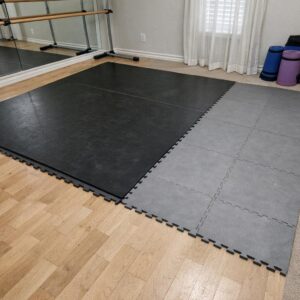
The surface matters, too: HSS advises avoiding uneven dance surfaces and recommends sprung flooring for dance involving jumps because of its shock absorption. Ask the studio about its floor rather than treating a shoe purchase as a substitute for a suitable space. Source: HSS dance surface guidance.
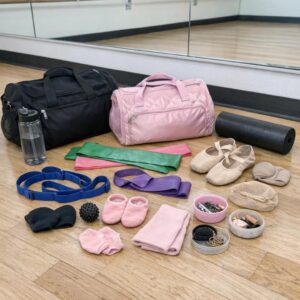
Finish with a small packing checklist
- Pack the approved class shoes separately from your travel shoes.
- Bring a water bottle, a light layer, and spare socks if needed.
- Tie back hair if it falls across your face.
- Leave dangling jewelry and bulky accessories at home.
- Check whether there is somewhere to change if you are coming from work.
Buy only what the first class requires. Once you have tried the lesson and spoken with the instructor, you can decide whether specialized clothing or shoes are worth adding.

GenDance Wellness is maintained by the GenDance Editorial Team and publishes informational content about dance fitness, beginner learning, dance gear, and safer home practice.