You do not need a full collection of dance accessories before your first class. Start by asking the studio what to wear, what footwear it requires, and whether it supplies any equipment. Then pack those items in a bag you already own.
Use the checklist below as a starting point—not a shopping list you must complete.
What to pack for your first dance class
- Required class clothing: Follow the studio’s dress code. If you are changing after work or school, pack the complete outfit rather than relying on memory.
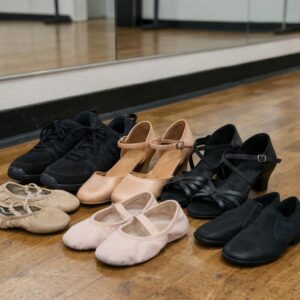
- Required footwear: Confirm the shoe type before buying. Ask whether the studio has a temporary option for a trial class.
- A refillable water bottle: Bring it filled, especially if you have not checked whether the studio has a refill station.
- Hair ties or clips: Pack what you need to keep your hair out of your face, plus a spare.
- A small towel and a change of clothes: Add these if you want to change before heading home.
- A small essentials pouch: Keep keys, hair accessories, and other small items together.
For footwear, fit matters as well as the studio’s dress code: the American Orthopaedic Society for Sports Medicine recommends properly fitting shoes and clothing for dancers. Read AOSSM’s dance injury guidance.
Make time to drink water during class breaks. The American Academy of Orthopaedic Surgeons recommends hydration before, during, and after exercise. See AAOS exercise safety advice.
Choose a bag around your actual load
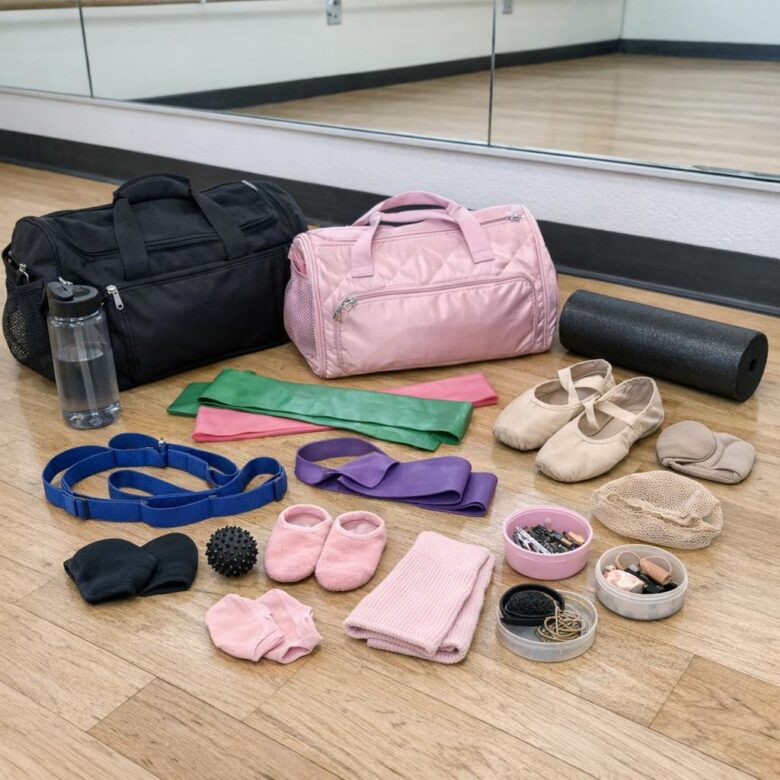
Before buying a dance bag, place your class items in your current backpack or tote. If everything fits and you can find what you need, keep using it.
If you do need a different bag, compare these practical features:
- Enough space for one class: Allow room for shoes, clothing, a bottle, and any equipment your teacher requests.
- A separate place for shoes: Use a compartment or a removable shoe pouch to keep them apart from clothing.
- A secure bottle pocket: Check that your own bottle fits before committing to the bag.
- An accessible small pocket: Give keys and hair ties a consistent place.
- Clear cleaning instructions: Check whether the lining can be wiped clean or the bag can be washed.
Inspect the stitching and zippers, and try the straps with your usual load if possible. Do not assume a higher price or a dance-specific label makes a bag more suitable.
Do beginners need stretch bands?
Treat a stretch band as optional unless your teacher asks you to bring one. Before buying, ask for the type, length, and resistance needed for the exercises you will learn. Avoid choosing a band solely because it is labeled “for dancers.”
Ask your instructor to demonstrate the setup and watch your first attempts. If a band is part of injury rehabilitation, get exercise and resistance instructions from your treating clinician rather than substituting a general dance routine.
Check the band and follow its instructions
Inspect your band before each use and replace it if you find tears, cracks, or abrasions. Follow the specific product’s safety directions, including any eye-protection requirements; THERABAND’s manufacturer recommends protective eyewear for its professional latex bands. Read the manufacturer’s band safety guidance.
Warm up before stretching, and keep stretches gentle rather than bouncing or pushing into pain. A band should not become a way to force a deeper position. See AAOS guidance on warming up and stretching.
Stop an exercise if it hurts. Persistent pain deserves assessment by a healthcare professional, not a stronger band or another accessory. Read AAOS advice on pain during exercise.
Accessories that can wait
Keep these off your first-class shopping list unless your instructor identifies a specific need:
- Grip aids and rosin: Ask the studio whether any product is appropriate and permitted before bringing or applying it.
- Massage balls and foam rollers: Skip them for now if you do not have a clear reason and instructions for using them.
- Turn boards and stretching devices: Ask what skill an item is intended to support before spending money on it.
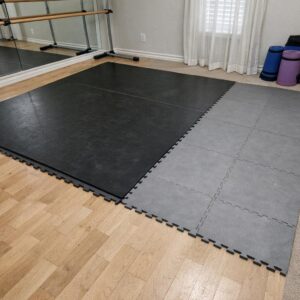
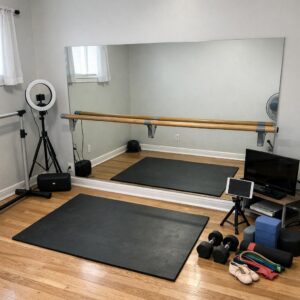
- A mat: Check whether class uses one and whether the studio provides it.
- Multiple resistance bands: Buy only the band requested for the exercises you are learning.
For any purchase, check the seller’s current return conditions before removing tags or using the item.
A quick reset after class
Unpack used clothing and your towel, empty and clean your bottle, and check that your required shoes are ready for next time. Replace missing hair ties and note anything the instructor asked you to bring.
Start with the class requirements, not the accessory aisle. Add equipment when you can name what you will use it for and who will show you how to use it.

GenDance Wellness is maintained by the GenDance Editorial Team and publishes informational content about dance fitness, beginner learning, dance gear, and safer home practice.