What if your “practice” is the reason you’re not improving?
Many beginner dancers work hard at home but repeat the same mistakes: rushing through steps, ignoring timing, skipping warm-ups, or practicing without feedback.
The good news is that faster progress doesn’t require a studio, expensive gear, or hours of free time. It requires a smarter routine that builds coordination, musicality, confidence, and clean technique one session at a time.
These beginner dance practice tips will help you train at home with more focus, avoid bad habits, and see real improvement from week to week.
Building a Strong Dance Foundation: Posture, Rhythm, Balance, and Body Awareness
Progress at home starts with the basics: posture, rhythm, balance, and body awareness. Before learning harder choreography, spend 10 minutes checking whether your spine is tall, shoulders are relaxed, knees are soft, and weight is evenly placed through your feet. This reduces unnecessary tension and helps prevent common beginner problems like stiff arms, heavy steps, or losing control during turns.
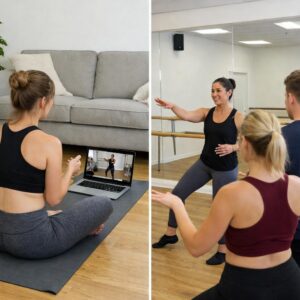
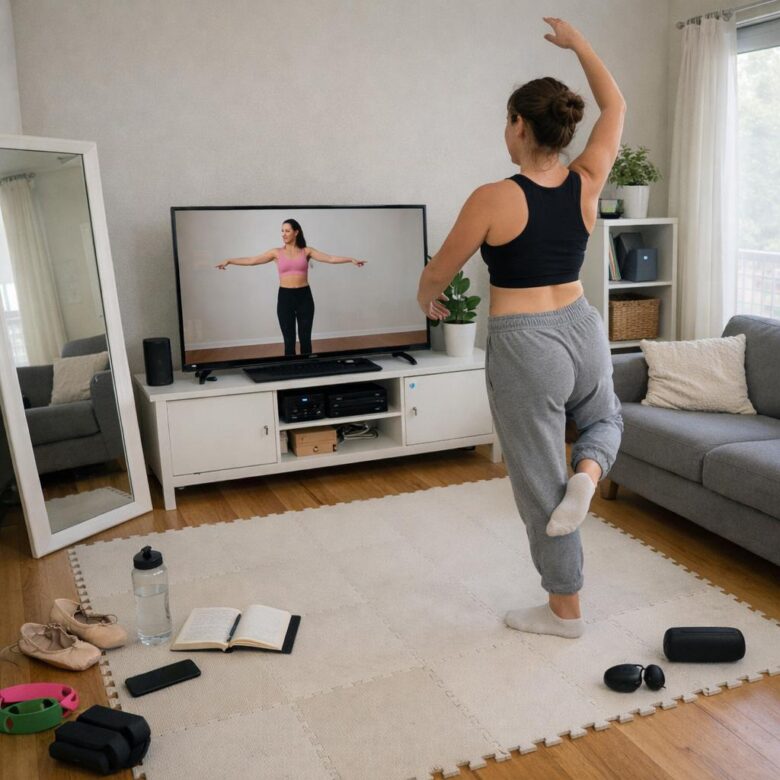
A simple setup can make a big difference. Use a full-length mirror, record yourself on your phone, or follow beginner-friendly online dance classes on Steezy Studio to compare your alignment with the instructor’s movement. For example, if your hip-hop groove looks flat on video, you may notice your chest is locked instead of bouncing naturally with the beat.
- Posture: Practice standing in “dance-ready” position for one song: ribs stacked over hips, chin level, core lightly engaged.
- Rhythm: Clap or step to the beat before adding arms, especially when using dance workout videos or a dance fitness app.
- Balance: Hold single-leg stands for 20-30 seconds to improve control for spins, footwork, and transitions.
Body awareness improves fastest when you slow movements down. Try marking choreography at half speed, then ask: Are my hands finishing the shape? Is my weight on the correct foot? These small checks are what make beginner dance practice look cleaner without needing expensive private dance lessons.
If you want extra feedback, affordable tools like a tripod, Bluetooth speaker, or wearable fitness tracker can help you review timing, energy, and consistency. The real benefit is not the cost of the equipment, but how honestly it shows what your body is doing.
How to Structure an Effective Beginner Dance Practice Routine at Home
A good beginner dance practice routine should feel organized, not random. Instead of replaying full choreography for an hour, split your session into warm-up, technique, skill drills, choreography, and review so every minute has a purpose.
For a 30-minute home dance practice, try this simple structure:
- 5 minutes: warm up with light cardio, joint rolls, and basic grooves to reduce injury risk.
- 10 minutes: work on technique such as balance, foot placement, body rolls, or hip isolation.
- 15 minutes: learn or clean a short routine using YouTube, an online dance class, or a dance fitness app.
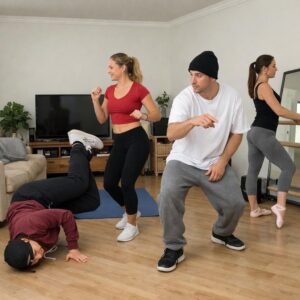
One real-world example: if you are learning a hip-hop routine at home, do not practice the full song from start to finish every time. Loop one 8-count, record it on your phone, then compare your timing, posture, and energy with the instructor before moving on.
Use simple tools that improve feedback: a full-length mirror, tripod, wireless earbuds, and a Bluetooth speaker can make home practice feel closer to a dance studio setup without the cost of private dance lessons. If you use a paid online dance subscription, choose one that offers beginner programs, slow-motion breakdowns, and progress tracking rather than only trendy choreography.
Keep your schedule realistic. Three focused sessions per week will usually build better muscle memory than one long, exhausting practice where your technique falls apart.
Common Home Dance Practice Mistakes That Slow Progress-and How to Fix Them
One of the biggest mistakes beginners make is practicing “full out” every time without checking technique. Energy feels productive, but if your weight placement, timing, or posture is off, you are simply rehearsing the wrong habit. Record one short section on your phone, then compare it with your online dance class or tutorial on YouTube at half speed.
Another common issue is using a poor practice setup. A slippery floor, bad lighting, or a camera placed too low can make footwork look worse than it is and increase injury risk. A basic tripod, a full-length mirror, and supportive dance sneakers or jazz shoes are low-cost tools that can improve feedback and safety at home.
- Mistake: Practicing random routines daily. Fix: repeat one skill for 10 minutes before learning new choreography.
- Mistake: Skipping warm-ups. Fix: do 5 minutes of mobility work for ankles, hips, and shoulders.
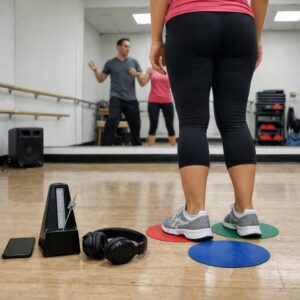
- Mistake: Ignoring musical timing. Fix: use a metronome app or count out loud before adding style.
A real-world example: if you keep missing a hip-hop groove, do not restart the whole routine. Loop just those two counts, film from the front and side, and check whether your knees are bouncing before your chest moves. This kind of video analysis is often more useful than buying another dance course right away.
Finally, avoid comparing your progress to advanced dancers online. If you can, book one affordable virtual private lesson every few weeks; a trained instructor can spot alignment issues, explain corrections, and save months of frustration.
Closing Recommendations
Progress at home comes from making dance practice simple enough to repeat and focused enough to measure. Instead of chasing every move at once, choose one clear goal for each session-better timing, cleaner footwork, smoother transitions, or more confidence on camera.
- Practice consistently: short sessions done often beat occasional long workouts.
- Use feedback: record yourself and adjust one detail at a time.
- Decide wisely: if you feel stuck, add a beginner class, tutorial, or coach to correct habits early.

Dr. Adrian Miles is a movement wellness specialist focused on dance fitness, online dance learning, and healthy body movement. He creates practical content to help readers improve coordination, confidence, flexibility, and overall well-being through accessible dance-based routines.