How to Dance at a Wedding: Simple Moves for Every Song
To know how to dance at a wedding, you need two skills: a slow side-to-side sway for romantic songs, and a relaxed step-touch for everything else. That covers most of the night. Add a little practice with your partner and a pair of comfortable shoes, and you will be ready. Wedding guests are there to celebrate, so a simple move done with a smile fits right in.
This guide works through each part of the evening, then gives you a short plan if you have a few weeks before the event.
The slow dance: a hold that works
You do not need ballroom lessons for a slow song. Here is the classic casual hold.
- Stand facing your partner, close but comfortable.
- One person places their hand on the other’s upper back. The other rests a hand on their partner’s shoulder.
- Join your free hands and hold them out at about shoulder height, or both of you can simply wrap your arms around each other.
- Shift your weight from side to side together, on the beat.
- Take a small step to turn slowly around the floor.
That is it. If you want a little more, try one gentle turn: lift your joined hands and let your partner walk under them. Agree on this before the song starts if you are nervous.
The party songs
When the floor fills up, use the same step-touch you would use anywhere: step right, bring your left foot in, then go the other way. Keep your knees soft and let your arms swing. In a group, form a loose circle so that nobody is on show. This guide on how to dance at a party has more arm ideas and tips for getting on the floor, and these easy dance moves give you a few extras.
What to do during each part of the night
| Moment | What usually happens | What to do |
|---|---|---|
| First dance | The couple dances alone | Watch, and clap at the end |
| Family dances | Parents join the couple | Stay off the floor until invited |
| Open floor | Guests are invited in | Good moment to join early, while it is busy |
| Slow songs | Couples sway | Use the hold above, or take a break |
| Group or line dances | Everyone follows the same steps | Stand in the middle and copy |
| Last song | Often everyone joins | Join in, even for the final chorus |
Traditions differ by culture and family, so watch what others are doing or ask someone at your table.
Group and line dances
Line dances look intimidating, but they repeat. Most patterns are short and turn the group to face a new wall. Stand in the middle of the group so that there is always someone to follow, even after a turn. If you get lost, keep stepping side to side until the pattern returns. Many of these dances use the grapevine, which you can practice at home in a few minutes. Some weddings also include cultural dances, such as the hora, where someone next to you will usually bring you into the circle.
Shoes and clothes
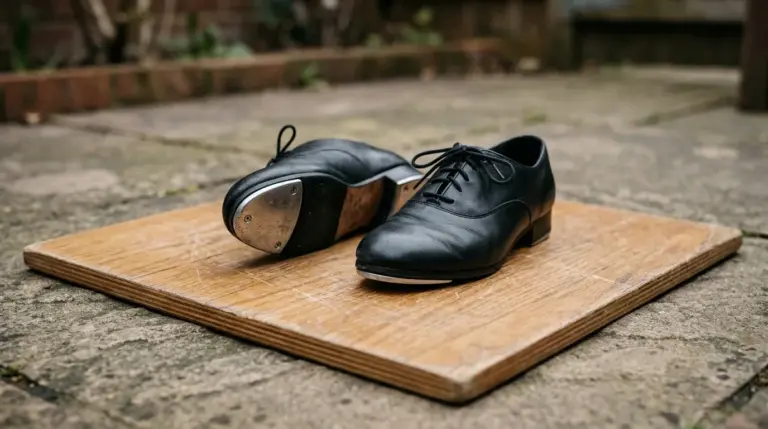
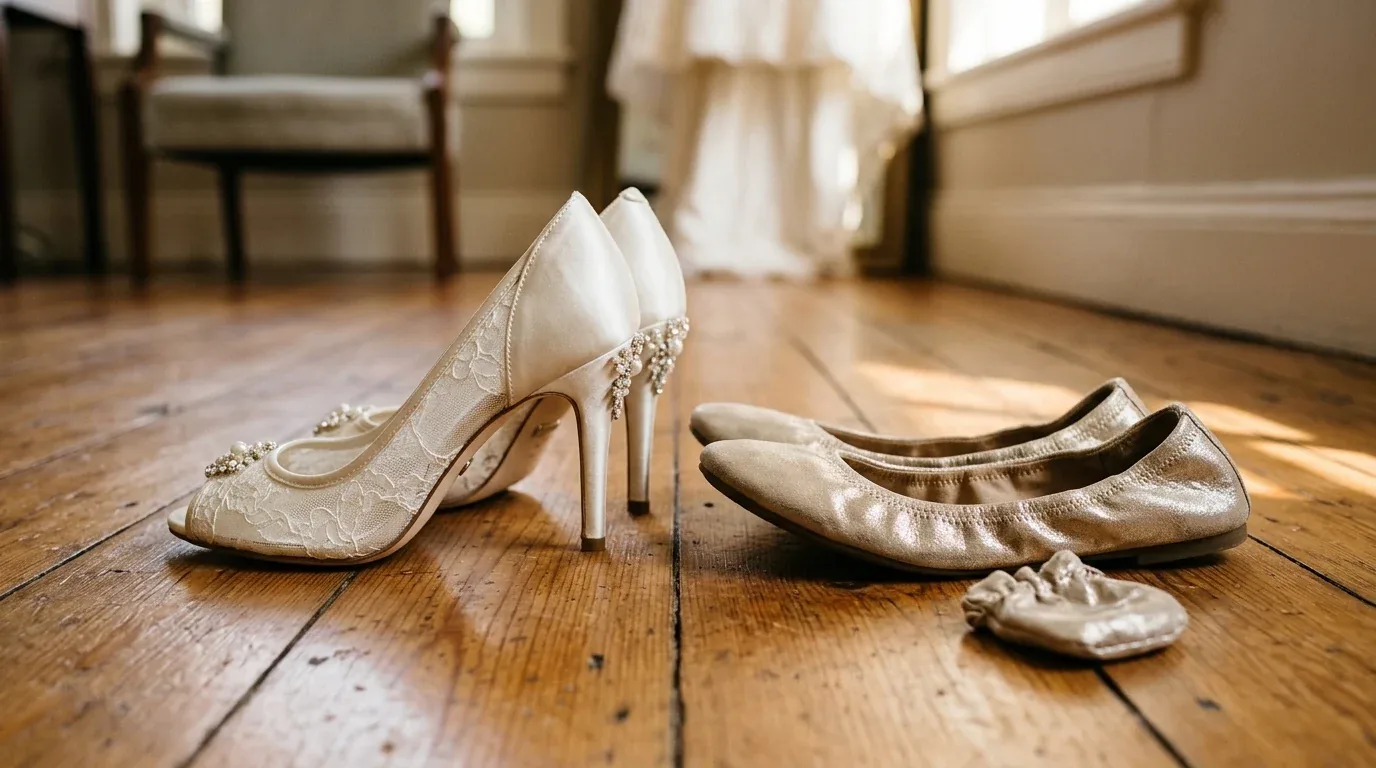
- Test your shoes. Wear them around the house before the wedding, and try a few steps on a smooth floor.
- Bring a backup. If you are wearing heels, pack flats for later. Some couples even provide them.
- Check your outfit. Lift your arms and do a step-touch at home. Fix anything that slips or pulls.
- Watch long hems. Know how to hold or bustle a long dress so you do not step on it.
A four-session plan before the wedding
If you have a few weeks, these short sessions will go a long way. They are a suggestion, not a tested program. Fifteen minutes each is enough.
| Session | What to practice |
|---|---|
| 1 | Find the beat in three songs, then sway and step-touch |
| 2 | Slow-dance hold with your partner, one gentle turn |
| 3 | Grapevine and a simple line dance tutorial |
| 4 | Dance through three songs in the shoes you will wear |
If the beat is your biggest worry, spend session one on these rhythm exercises. If you would like feedback, a single private lesson can be useful, and this comparison of online and in-person dance lessons includes advice for wedding preparation.
If it is your wedding
Your first dance does not have to be choreographed. Many couples simply sway, talk to each other, and add one or two turns. Choose a song you can count, practice in your actual shoes, and plan how you will start and finish, because those are the moments people remember. If your dress or suit changes how you move, try a rehearsal in something similar. A teacher can also help you build a short routine, and this guide to a beginner dance routine shows how to structure one by yourselves.
Common mistakes
- Waiting until everyone else is dancing. Earlier songs are often easier, because the floor is friendly and busy.
- Trying something new on the night. Keep lifts, dips, and spins for those who have practiced them.
- Staring at your feet. Look at your partner and friends instead.
- Dancing in shoes that hurt. Change them, or take a break.
Stay comfortable on the day
Watch your step on polished or temporary dance floors, and be careful outdoors, where grass and uneven boards can catch a heel. Better Health Channel notes that floor conditions and obstacles can contribute to dance injuries. Sit out a few songs if your feet hurt, and drink water along with anything else you are having.
A last word on nerves
Nobody at a wedding goes home talking about a guest’s footwork. People remember that you joined in. Pick one slow song and one fast song to dance to, and consider that a success. Everything else is a bonus.

GenDance Wellness is maintained by the GenDance Editorial Team and publishes informational content about dance fitness, beginner learning, dance gear, and safer home practice.