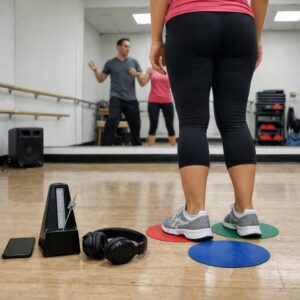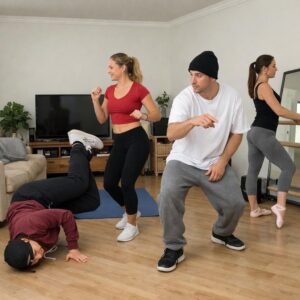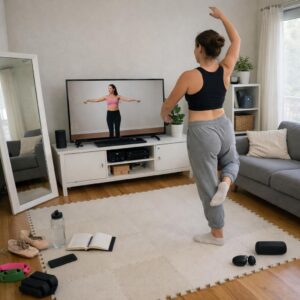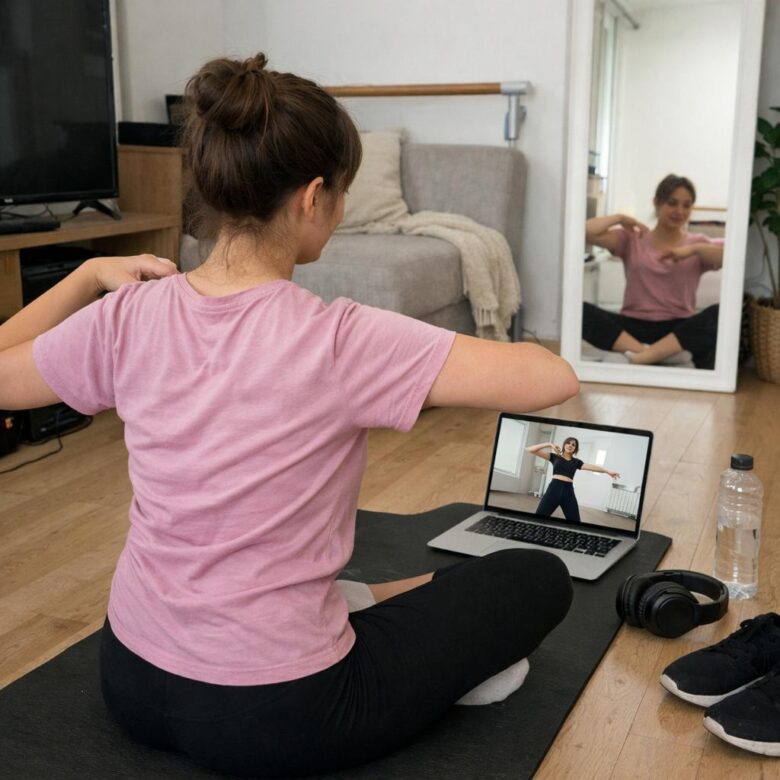
For your first online dance session, aim to learn one basic step—not an entire routine. Choose a lesson that explains where to put your feet, when to shift your weight, and how to count the movement. Then give yourself permission to pause and repeat.
Choose a lesson that actually starts at the beginning
Pick a style you want to explore, then search for an introductory series rather than a performance clip. Try search phrases such as “hip-hop foundations for absolute beginners” or “salsa basic step breakdown.” Treat the word “beginner” as a starting point, not a guarantee that the lesson will suit you.
Before committing to a course, preview a lesson and check for:
- Clear demonstrations: Can you see the instructor’s feet and whole body?
- Spoken explanations: Does the teacher explain weight shifts and starting positions, rather than only asking you to copy?
- Slow practice: Is there a walkthrough before the music starts?
- Directions: Does the teacher explain whether to mirror the screen or use the same right and left sides?
- A lesson order: Is it clear which class to take next?
If you cannot follow the opening explanation even after pausing, try a more introductory lesson. Before paying, check the total cost, renewal terms, cancellation process, and whether instructor feedback is included.
Prepare your space and check the floor
Move furniture and loose objects out of your practice area. Position your screen where you can see it from your starting position, and check that you have room for the movements shown in the lesson. For a live class, test the camera framing so your feet and raised arms remain visible.
Avoid uneven dance surfaces. Hospital for Special Surgery also recommends a sprung floor for dance that involves jumping because it provides shock absorption. Do not assume an ordinary home floor is suitable for repeated jumps. Source: HSS guidance for dancers.
Ask the instructor what footwear the style and surface require rather than assuming one pair of sneakers works for every class. HSS recommends dance-appropriate footwear and notes that shoe support deteriorates with wear. Source: HSS footwear guidance.
Work through one short sequence
Use this as a practice outline, not a required workout length. Schedule a couple of manageable sessions to start, and leave time to repeat the same lesson.
- Warm up first. Start with gentle movements such as marching and shoulder rolls. The NHS provides a warm-up sequence lasting at least six minutes; take longer if needed. Source: NHS warm-up guidance.
- Watch a short section. Choose one step or a few counts. Notice the starting foot, direction, and finishing position.
- Try the feet without the arms. Pause the video and say the instructions aloud: for example, “step right, bring left in.”
- Add the count. Follow the instructor’s spoken count before trying the music. Use slower playback if the video offers it.
- Add one detail. Try the arms or a change of direction—not every detail at once.
- Write your next task. Leave yourself a specific note, such as “repeat the transition after the side step.”
Stop exercising if you feel pain or become unwell. Do not keep repeating a painful movement to get the choreography right. Source: NHS exercise safety advice.
Review your practice without judging your appearance
If you are comfortable recording yourself, film one short attempt and keep it private. Review only one question at a time:
- Did I start on the intended foot?
- Did I change direction at the same point as the demonstration?
- Which transition made me stop?
Use those observations to choose what to repeat. Avoid treating a recording as a diagnosis of your posture or joint alignment; bring technique questions to an instructor who can watch you move.
If you have an injury, a health condition, or uncertainty about whether the activity is appropriate for you, get advice from a healthcare professional before starting. Source: NHS exercise safety guidance.
Decide what comes next
Set a practical checkpoint: can you repeat the short sequence without watching every step? If not, keep working on that section or ask for a slower explanation. If yes, add the next section and practice the transition between them.
Your first milestone can be modest: remember a basic step, follow its count, and know what you want to practice next.

GenDance Wellness is maintained by the GenDance Editorial Team and publishes informational content about dance fitness, beginner learning, dance gear, and safer home practice.