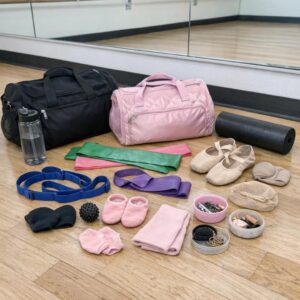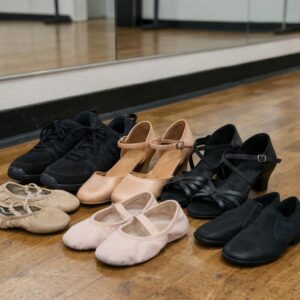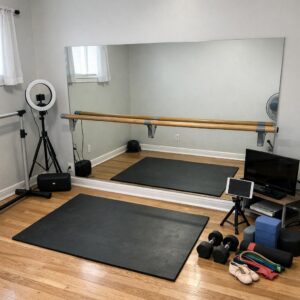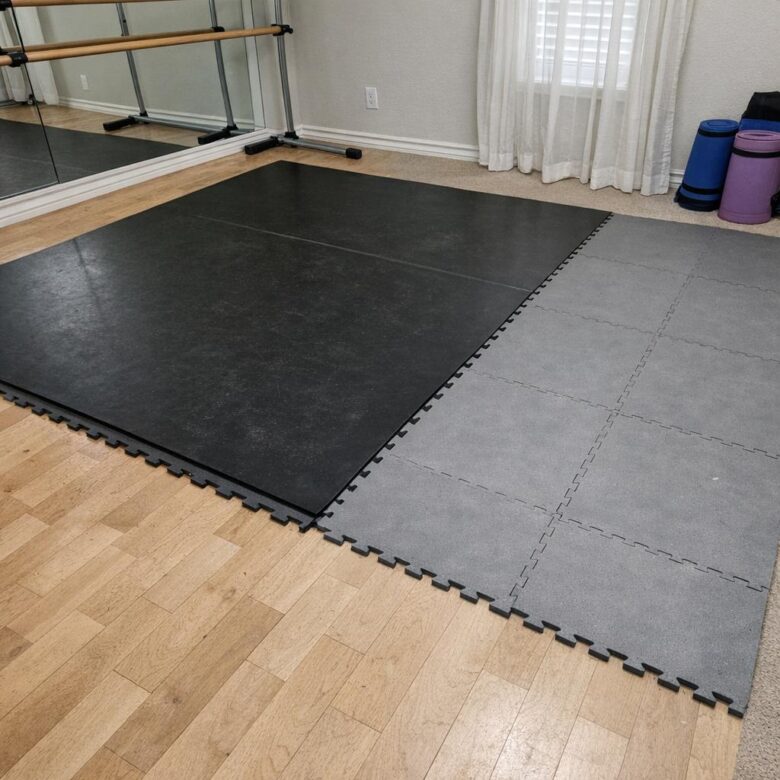
Start with two questions: What will you practice, and what is underneath your existing floor? Choose the surface and its supporting structure together, rather than buying a dance mat first and figuring out the base later.
The surface and the support do different jobs
A sprung dance floor combines a stable deck with a resilient supporting system that absorbs landing impact. The top surface provides the finish your feet move against. Ausdance recommends sprung, semi-sprung, or cushioned flooring designed for dance. Source: Ausdance’s safe dance floor guidance.
A roll of dance vinyl is not, by itself, a sprung floor. Manufacturers distinguish vinyl performance surfaces from sprung floor systems and specify which combinations suit particular uses. Source: Harlequin’s floor selector.
Flooring options worth comparing
Dance vinyl, often called marley
Consider dance vinyl when comparing surfaces for ballet, jazz, or contemporary practice, but check the exact product’s intended uses. Vinyl floors vary: some are cushioned, some are not, and not every product is recommended for every dance style. Source: Harlequin’s product-use selector.
For ballet, the finish needs grip while still allowing controlled sliding. Barefoot dancing calls for a finish that balances grip with reduced friction against skin. Neither requirement can be judged from the word “vinyl” alone. Source: Ausdance.
A sprung system with a compatible dance surface
Put this option on your shortlist for a dedicated practice area, especially if your planned work includes jumps. Its supporting structure distributes loads and absorbs landing impact; the surface finish still needs to suit your technique. Source: Ausdance.
Ask for specifications for the complete assembly. Do not substitute generic foam or rubber for the specified supporting system without the flooring manufacturer’s approval.
Wood flooring for ballroom and social dance
Wood can be appropriate for ballroom, folk, and social dancing. Its construction matters, however: boards laid directly over concrete do not provide the same resilience as a supported wooden floor. Check for splinters, uneven areas, and protruding fasteners. Source: Ausdance.
A dedicated tap board or tap-rated floor
For tap practice, compare purpose-built boards and flooring explicitly approved for tap. Some dance vinyl products accommodate tap, so wood is not the only possible choice; product compatibility matters more than the material name. Source: Harlequin’s tap flooring guidance.
Before buying a board, ask about its required base, edge treatment, usable practice area, and protection for the floor beneath it. For an apartment, also ask about impact-noise testing rather than assuming a board will keep practice quiet.
Check the installation before ordering
- Carpet: Do not assume you can roll vinyl straight over it. Harlequin advises against laying its vinyl directly on carpet, although certain complete home studio kits use sprung panels over an existing carpeted base. Follow the instructions for the exact system. Source: vinyl installation FAQ; source: home studio kit instructions.
- Concrete and moisture: Follow the product’s substrate-preparation and moisture-testing requirements. For example, Harlequin Studio instructions require concrete to be smooth, level, dry, clean, and tested before installation. Do not treat a room humidity reading as a substitute for the specified slab test. Source: Harlequin Studio installation instructions.
- Tape and seams: Use the specified tape and installation method. Even within one manufacturer’s range, instructions can differ about whether underside taping is appropriate. Source: Harlequin’s cutting and taping instructions.
What to ask before you spend
Send the supplier your room dimensions, existing floor construction, dance styles, footwear, and storage needs. Request written confirmation that the proposed setup suits those conditions.
Compare the full installed cost, including the supporting system, surface, delivery, tape, edge ramps, installation, and maintenance supplies. Ask your teacher which parts of your practice fit the available space before committing to a small platform.
Choose a complete setup for your actual practice—not a surface marketed as universally “safest.” If the base or installation requirements remain unclear, resolve those questions before buying.

GenDance Wellness is maintained by the GenDance Editorial Team and publishes informational content about dance fitness, beginner learning, dance gear, and safer home practice.