8 Easy Dance Moves for Beginners to Learn at Home
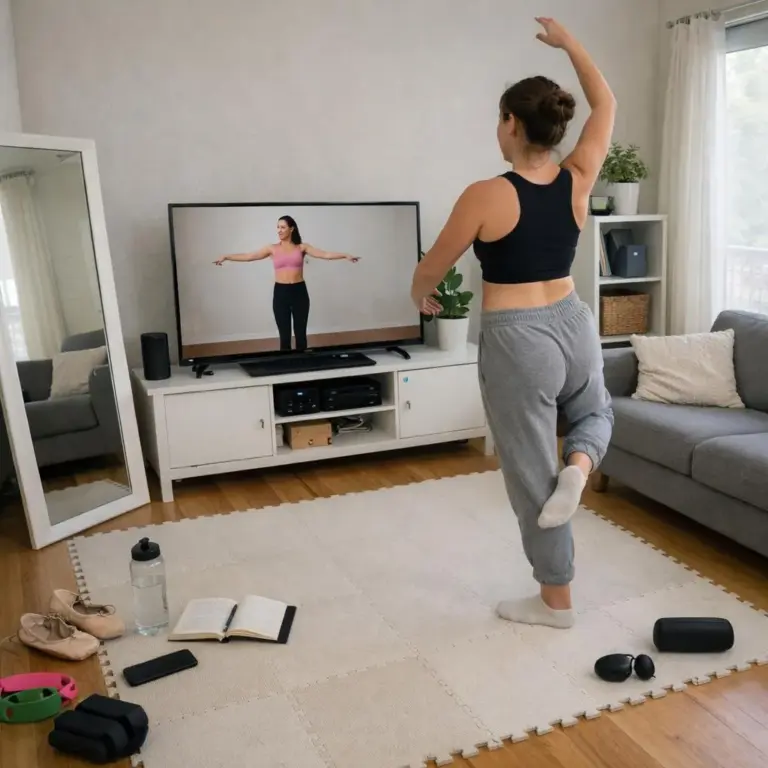
The best easy dance moves for beginners use small steps and a clear count: the step-touch, the two-step, the side tap, and the grapevine are all good places to start. You do not need a partner, a studio, or any sense of “natural rhythm” to learn them. You need a little floor space and a song with a steady beat.
Below are eight moves in the order we suggest learning them. Each one builds on the last, so by the end you will have enough material to dance through a whole song at a wedding, a party, or in your kitchen.
Before you start
Clear a space about as wide as your arms can reach, and check that the floor is dry and free of cords. Wear shoes that fit well and do not slip on your surface. Socks on a smooth floor are a poor choice for anything that moves sideways. A slow song at first will make every step below easier, and you can pick up the pace later.
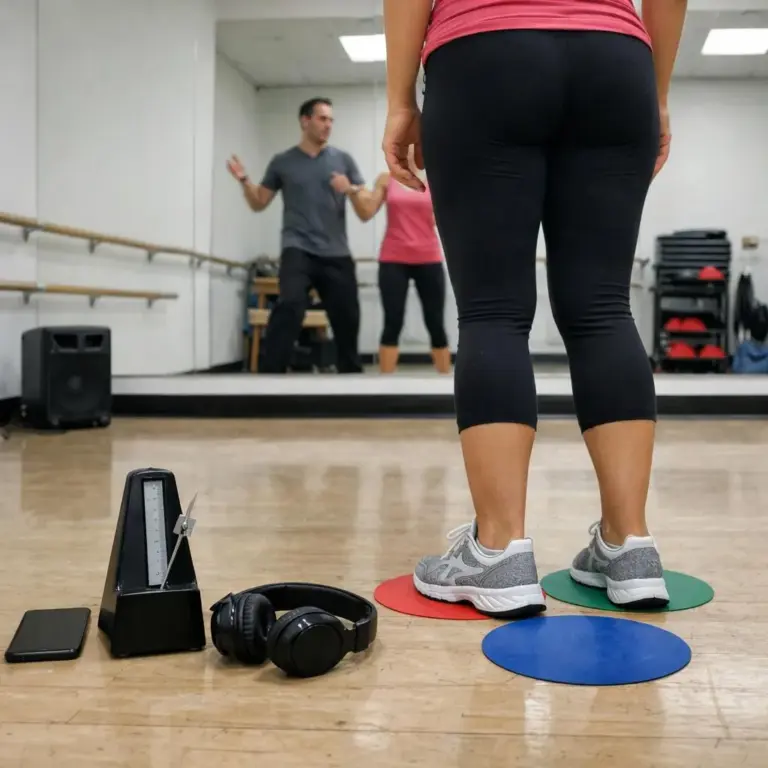
Try each move without music first. Say the steps out loud. Once your feet know the pattern, add the song. If you are not sure where the beat is, spend a few minutes on these rhythm and coordination drills before you continue.
Eight moves, from simplest to slightly harder
1. The step-touch
Step to the right with your right foot. Bring your left foot in and tap it beside your right, keeping your weight on the right. Repeat to the left. This is the base of a huge number of social dances, so give it time.
2. The two-step
Step right, bring your left foot in, step right again, and tap your left foot beside it. Then go the other way. It is a step-touch with one extra step, and it covers more floor.
3. The heel dig
Place your right heel a little in front of you with your toes pointing up, and bring it back. Switch feet. Add a small clap on each dig once you feel steady. This move works well when the room is crowded.
4. The side tap
Stay in one spot. Tap your right toes out to the side and bring them back, then do the same on the left. Let your arms swing a little in the opposite direction, which helps the move look relaxed.
5. The body roll, simplified
Skip the dramatic version. Stand with soft knees and gently push your chest forward, then your stomach, then your hips, in a small wave. Keep it tiny. If anything feels strained, leave it out.
6. The grapevine
Step right with your right foot. Cross your left foot behind it. Step right again, and tap your left foot beside your right. Reverse it to go left. This four-count pattern shows up in line dances and fitness classes, so it is worth the extra practice.
7. The box step
Imagine a small square on the floor. Step forward with your right foot, bring your left across to the side, step back with your right, then step your left back to the start. Go slowly until the shape feels automatic.
8. The pivot turn
Step forward with your right foot, then turn gently to the left on the balls of both feet so you face the opposite way. Do it again to return. Keep the turn slow and avoid it entirely on carpet, which can hold your foot in place while your knee keeps turning.
Which move suits which song?
| Type of song | Moves to try | Why they work |
|---|---|---|
| Slow pop or soul | Step-touch, side tap | Small and easy to keep relaxed |
| Upbeat pop | Two-step, heel dig | Light and quick to change |
| Country or line-dance tracks | Grapevine, heel dig | Four-count patterns fit the phrasing |
| Latin pop | Box step, side tap | Lets you stay in a small space |
Make your arms look natural
Arms are where most beginners freeze. A simple rule helps: let them follow your feet. When you step right, let your arms drift a little to the right. Bend your elbows so your hands stay around waist height, and keep your shoulders low. You can also snap, clap on the beat, or hold one hand loosely in the other. Add arms only after your feet are comfortable, because adding them too soon is a common reason a step falls apart.
A two-minute practice routine
This is a suggested sequence, not a tested program. Pick a song you like and use eight counts for each line.
- Step-touch, four times each way.
- Two-step to the right, then to the left.
- Heel digs, alternating feet.
- Grapevine to the right, then to the left.
- Side taps to finish, then repeat from the top.
Repeat it a few times and stop while it still feels good. If you want a fuller plan, this guide to learning dance online as a beginner shows how to pick lessons once these steps feel familiar.
Common mistakes
- Looking at your feet. Check them while learning, then lift your eyes. Your balance usually improves when you do.
- Taking big steps. Small steps are easier to control and easier to keep on the beat.
- Locking your knees. Keep a slight bend so your body can move with the music.
- Trying to learn all eight today. Two moves you can repeat are worth more than eight you half remember.
Practice safely
Even simple steps deserve a quick warm-up. The NHS offers a short warm-up routine that begins with gentle marching, and it only takes a few minutes. Keep your first sessions short, and stop if a move hurts.
Where to go next
Once these steps feel familiar, try turning them into something longer with this guide to a dance routine for beginners. If you want to use them to move more during the week, these low-impact dance exercises use similar footwork without any jumping. If a step causes pain, stop and leave it out, and speak with a health professional if the pain continues.
For today, choose just two moves. Put on one song, repeat them until the track ends, and let that be your whole practice.

GenDance Wellness is maintained by the GenDance Editorial Team and publishes informational content about dance fitness, beginner learning, dance gear, and safer home practice.