Ballet for Adult Beginners: What to Expect and How to Start
Ballet for adult beginners starts with slow, simple exercises, and you do not need a dancer’s body, any past training, or pointe shoes. A typical class begins at the barre, moves to the center of the room, and is built around small, repeated movements. Most adult students start for fun, for coordination, or because they always wanted to try.
This guide explains what to expect, what to learn first, and how to practice between classes. It is general information, so follow your teacher’s direction whenever it differs from what you read here.
Is it too late to start ballet as an adult?
No. Adult ballet classes exist because plenty of people begin in their twenties, forties, sixties, and beyond. The honest limit is that a late start will not usually lead to a professional career. For nearly everyone else, that does not matter. You can enjoy the music, improve your body awareness, and learn a real technique at your own pace.
What happens in a first class
Classes vary, but this structure is common.
| Part of class | What you do | What it teaches |
|---|---|---|
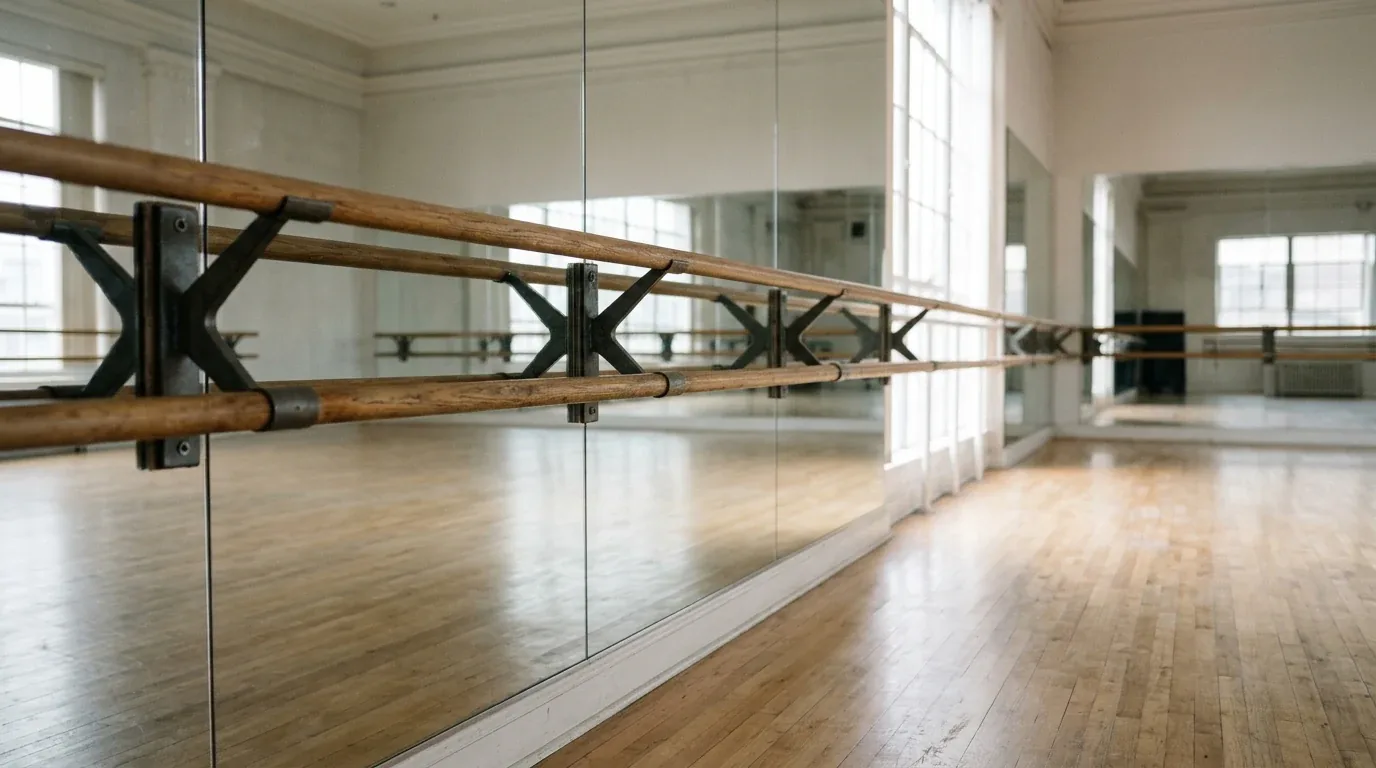
| Barre | Foot, leg, and balance exercises with one hand on a rail | Posture and control |
| Center | Slow exercises away from the barre | Balance without support |
| Across the floor | Traveling steps in small groups | Moving through space |
| Reverence | A short closing bow | Thanks to the teacher and pianist |
Do not worry about keeping up. Stand behind someone who seems to know the exercise, and watch. Teachers expect beginners to be lost for the first few weeks.
What to wear and bring
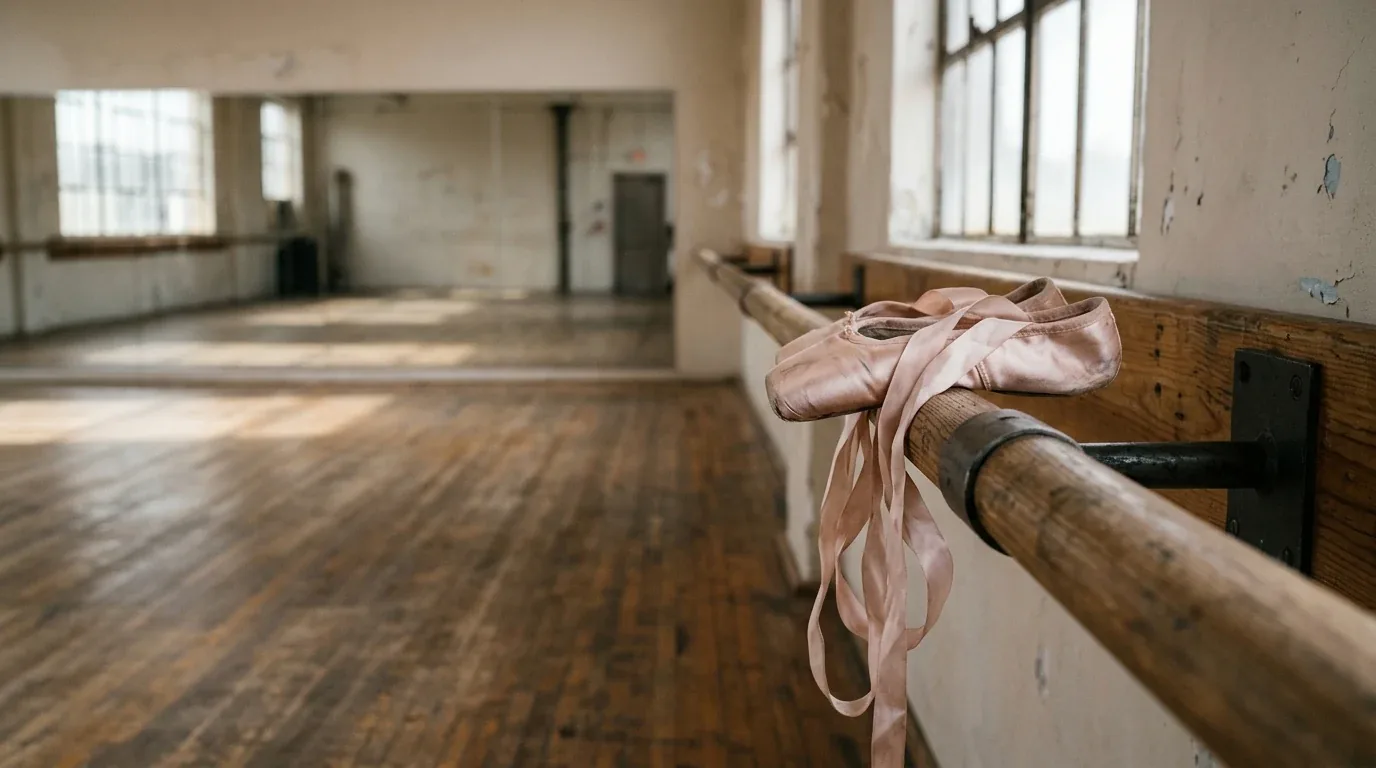
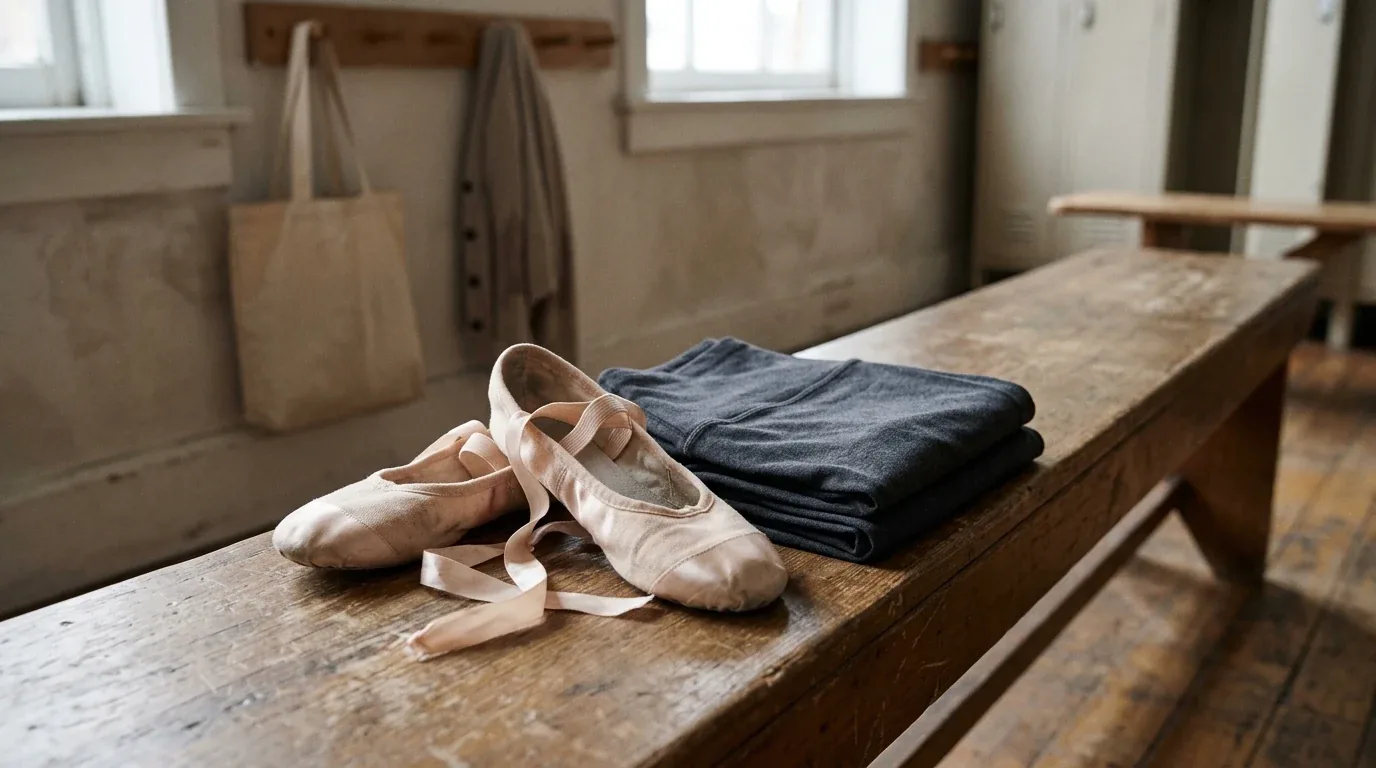
Ask the studio first, because dress codes differ. Many adult classes accept fitted workout clothes that let the teacher see your knees and hips. Soft ballet slippers are often requested, though some studios allow socks for a first lesson. This guide on what to wear to your first dance class covers the details, and this page on beginner dance shoes explains how to check the fit before you buy.
Pointe shoes are not for beginners. Dancing on pointe demands years of strength work, and a teacher decides if and when a student is ready.
Five positions to recognize
Ballet has five basic positions of the feet. You do not need to master them before class, but knowing the names will help you follow along.
- First: Heels together, toes turned out.
- Second: Feet apart, about shoulder width, turned out.
- Third: One heel placed against the middle of the other foot.
- Fourth: One foot in front of the other with a small gap.
- Fifth: Feet crossed closely, heel to toe. Beginners often skip this one for a while.
Turnout comes from the hips, not from twisting your knees or forcing your feet. Only turn out as far as your hips allow, and let your knees point in the same direction as your toes. A smaller, correct turnout is far better than a wide one that strains your joints.
Words you will hear
Ballet uses French terms. These are the ones you will likely meet first:
- Plié: Bending the knees.
- Tendu: Stretching the foot along the floor.
- Relevé: Rising onto the balls of the feet.
- Port de bras: Carriage of the arms.
- Chassé: A gliding step where one foot chases the other.
Studio class or online lessons?
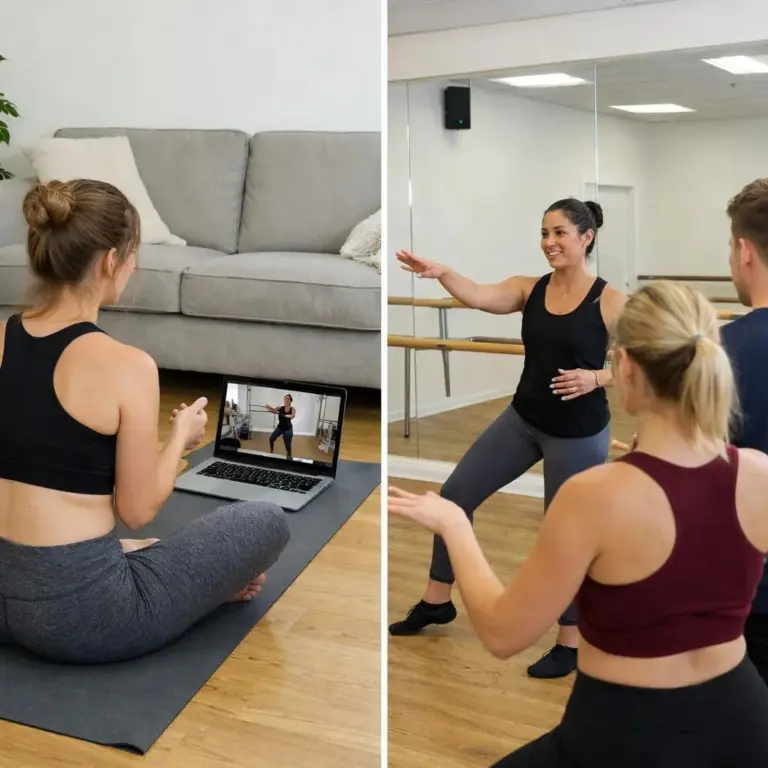
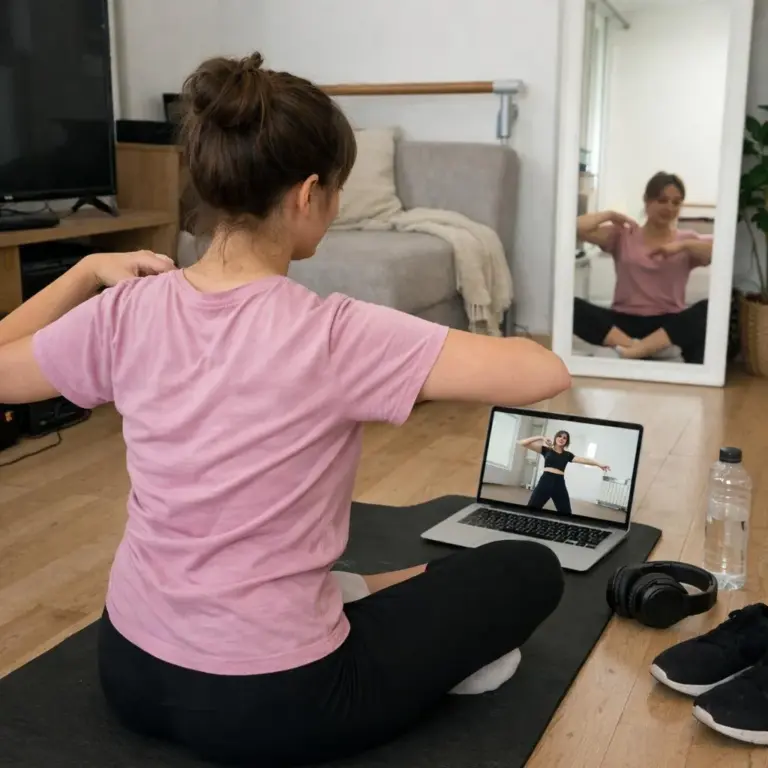
For ballet, in-person teaching is especially useful at the start, because small alignment errors are difficult to see in your own body. A teacher can adjust your turnout or posture on the spot. Online lessons can still help you remember combinations and try ballet if no studio is near you. This comparison of online and in-person dance lessons can help you decide. If you practice at home, use a sturdy barre or a stable support, and ask your teacher whether a chair is suitable for a specific exercise.
How to practice between classes
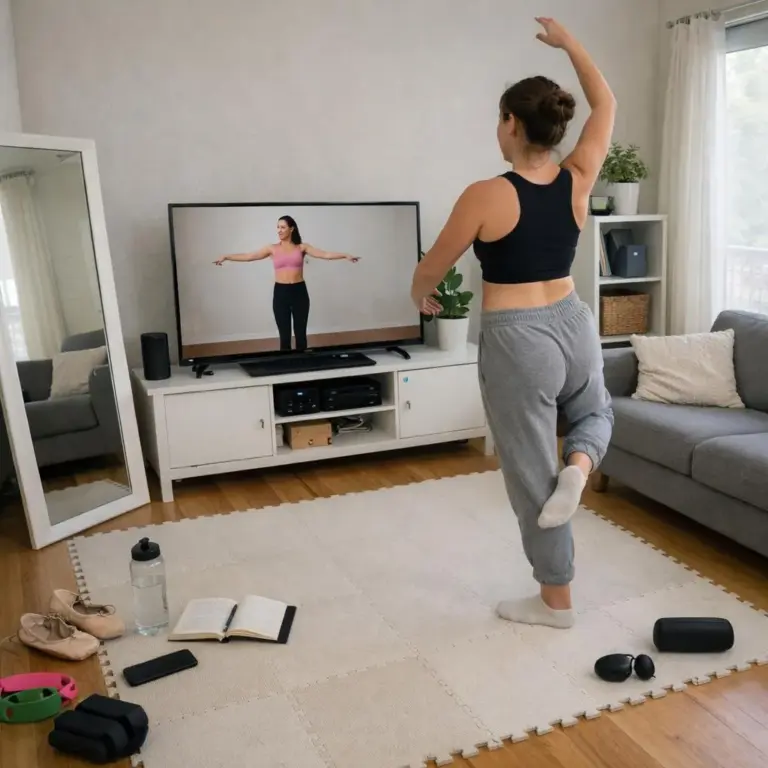
A short routine is enough. Try a few slow pliés, some tendus, and balances with one hand resting on your support. Check your floor first: Hospital for Special Surgery advises dancers to avoid uneven surfaces, and it recommends a sprung floor for dance that involves jumps. That is a good reason to leave jumps for the studio. If you want to set up a small area, read this home dance studio guide.
Stay comfortable
Warm up before class and stretch gently rather than bouncing or forcing a position. Johns Hopkins Medicine lists warming up, rest, and proper footwear among its dance injury prevention tips. Stop if a movement hurts, and tell your teacher about any injury before class. If you have a health condition, ask a healthcare professional whether ballet is suitable for you.
Questions adult beginners ask
Do you need to be flexible?
No. Flexibility develops gradually, and beginner classes do not expect it. Work within your comfortable range.
How often should you take class?
Once a week is a realistic start. Many students add a second class when their schedule allows it.
Will you feel out of place?
Choose a class labeled adult beginner or absolute beginner. Everyone there has chosen to start from the same place as you.
How to choose a class
Look for a class described as adult beginner, absolute beginner, or open beginner. Read how the studio describes it, because “open level” can mean a mixed room where the pace is faster. Ask whether you can try a single class before paying for a term, and whether a live pianist or recorded music is used. A patient teacher matters more than a famous studio name. After your first class, ask yourself whether you got any corrections and whether the steps were explained. If not, try another teacher before you decide ballet is not for you.
Your first step
Search for “adult beginner ballet” near you, email the studio to ask about clothing and shoes, and book one trial class. Then simply watch, copy what you can, and go back the next week.

GenDance Wellness is maintained by the GenDance Editorial Team and publishes informational content about dance fitness, beginner learning, dance gear, and safer home practice.