Hip Hop Dance for Beginners: Grooves and Steps to Try First
Hip hop dance for beginners starts with the groove, not the choreography. Learn to bounce and rock to the beat first, then add simple foundation steps like the two-step, the running man, and the top rock. Those few basics will make any class or tutorial easier, because hip hop depends on how you feel the music as much as on where your feet go.
You do not need to be young, flexible, or an expert in the culture to begin. You do need to relax your body, which is often the hardest part. Here is a simple way in.
Learn the groove before the steps
Put on a track with a clear beat, around a medium tempo. Stand with your feet about shoulder-width apart and your knees soft.
The bounce
Bend your knees slightly on each beat, then rise. It is a small, constant pulse, as if your body is nodding along. Try bouncing down on the beat, then try bouncing up on the beat, and notice how each one feels different.
The rock
Shift your weight forward and back, or side to side, letting your chest and shoulders follow. Keep it easy. A good rock looks like you are enjoying the song, not like you are doing an exercise.
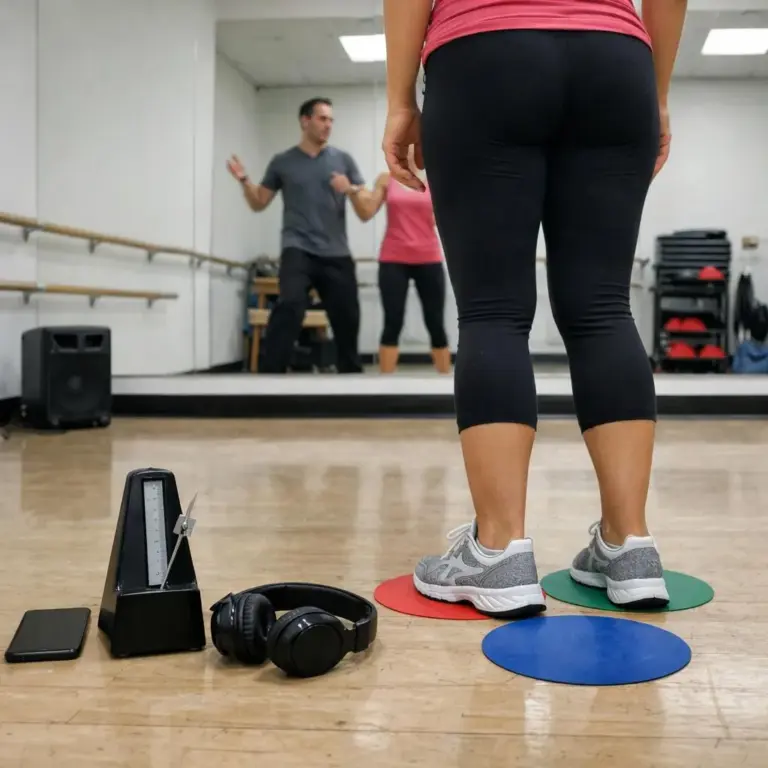
Stay here for a full song before moving on. If you are not sure you are on the beat, try these rhythm drills first. Almost everything else in hip hop sits on top of this feeling.
Four foundation steps
| Step | How it works | Tip |
|---|---|---|
| Two-step | Step side, bring the other foot in, repeat the other way | Keep the bounce going |
| Top rock | Cross one foot in front, step back, then switch sides | Let your arms swing |
| Running man | Lift a knee, slide the standing foot back, and switch | Start slowly, on a smooth floor only |
| Body wave (simple) | Roll chest, stomach, and hips in sequence | Keep it small at first |
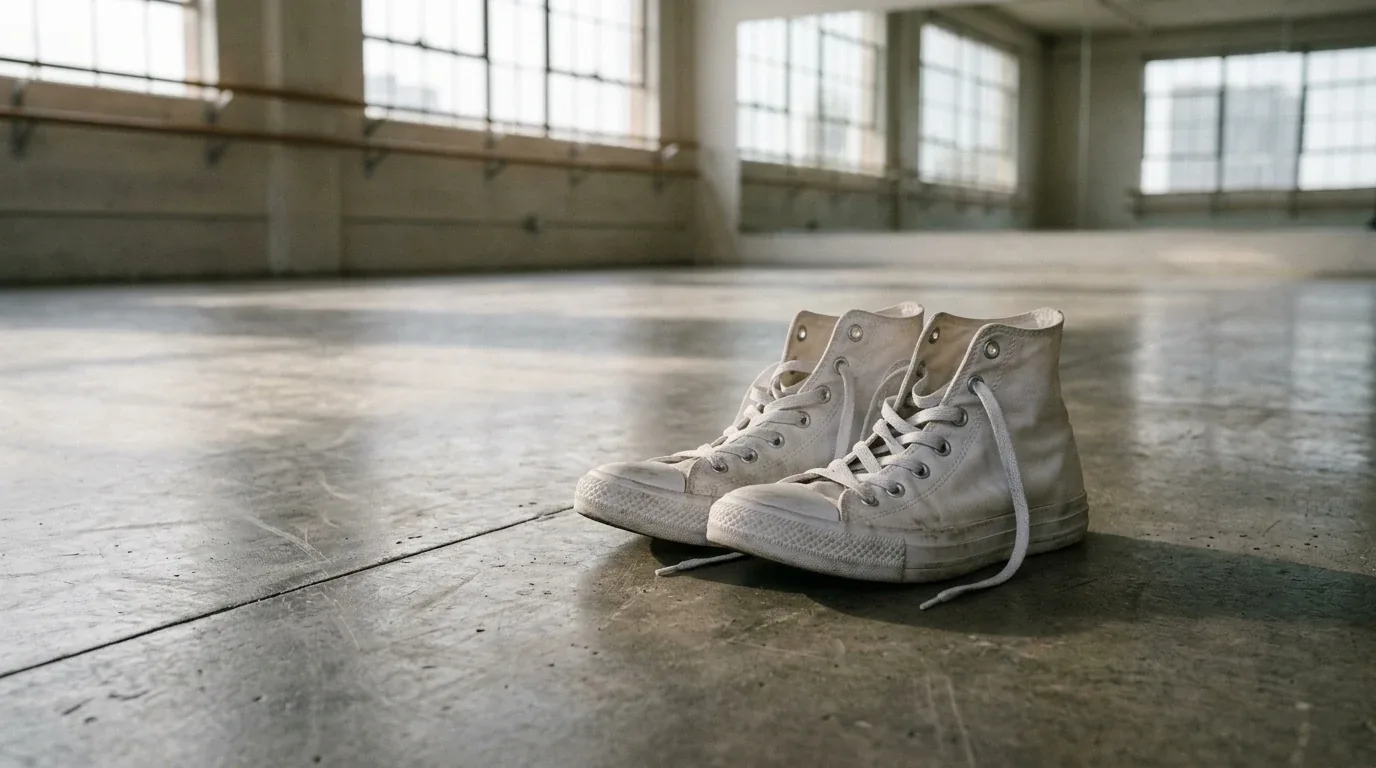
Take your time with each one. Try it slowly with no music, then at half speed, then with the track. The running man involves sliding, so make sure your shoes and floor allow it without sticking or slipping. Rubber soles on carpet can catch, which puts stress on your knees.
A short beginner combination
Use eight counts for each line and keep your bounce throughout.
- Two-step right and left, twice.
- Top rock, right and left, twice.
- Rock forward and back with your arms loose.
- Two-step, then finish with a confident stop on count 8.
Repeat it until you can look up from your feet. Then film yourself and look at one thing only: are your knees bending with the beat? Most beginners discover they are much stiffer than they feel. Our guide to a dance routine for beginners explains how to extend a short combination like this one.
What to wear
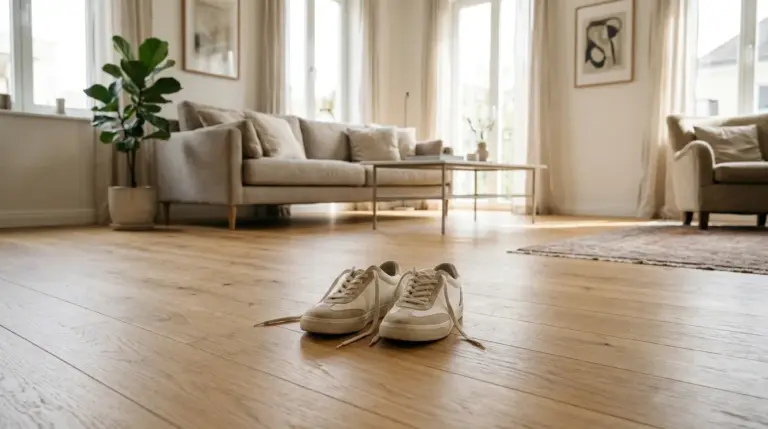
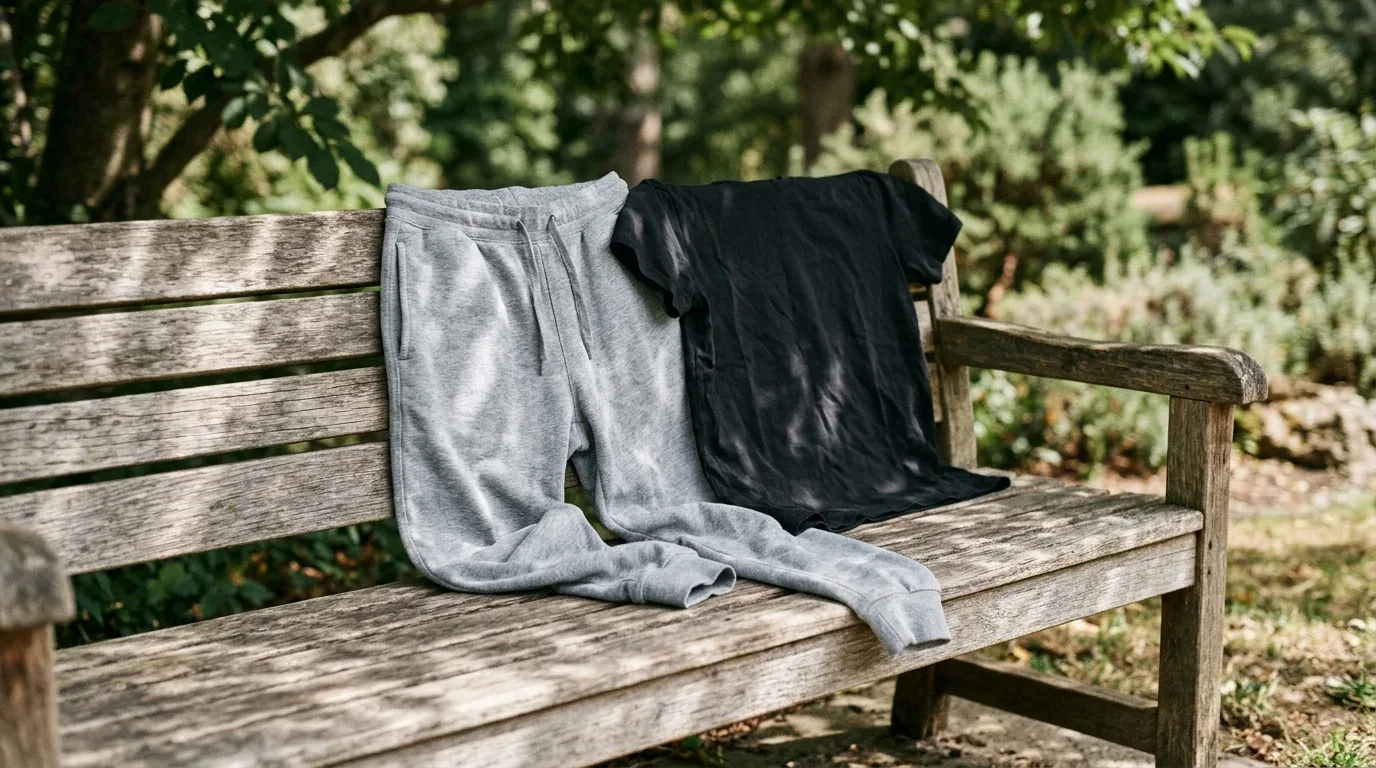
Choose clothes you can bend in. Loose joggers and a T-shirt are a common choice. For footwear, many hip hop classes accept clean sneakers, and flat soles often feel better than running shoes with a big heel. Before your first class, check the studio’s rules, since some require shoes that are only worn indoors. This guide on what to wear to a first dance class has a quick checklist.
How to choose a good tutorial
- Look for “foundations” or “grooves.” Many videos labeled beginner jump straight into fast choreography.
- Check that it counts. A good teacher breaks the steps down and counts them.
- See the whole body. You need to see the feet.
- Prefer slow demonstrations first. The move should be shown slowly before it is shown with music.
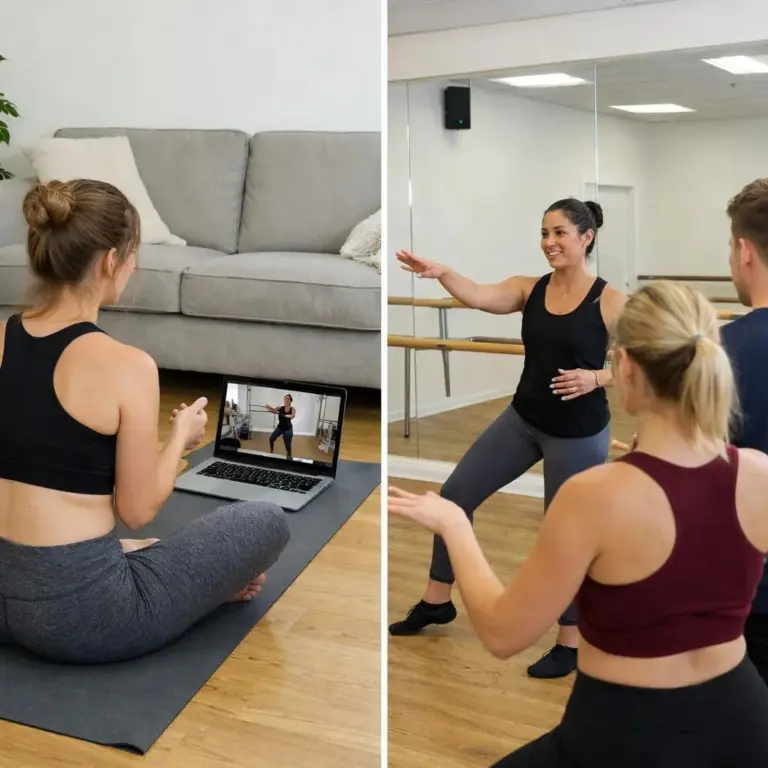
These same checks apply to paid courses, as this guide to learning dance online explains. If you want to compare hip hop with other options, read this list of dance styles to learn at home.
A note on culture
Hip hop grew out of Black and Latino communities in New York City in the 1970s, alongside DJing, MCing, and graffiti. Knowing that history adds real depth to what you are learning. Terms like breaking, popping, and locking refer to distinct styles with their own pioneers. Many studio classes use “hip hop” as a broad label, so ask what a particular class actually teaches.
Common beginner mistakes
- Standing too upright. Bend your knees and lower your center of gravity a little.
- Stopping the bounce. When you think about your feet, your groove often freezes. Keep it going, even if the step is imperfect.
- Copying speed instead of feel. A slow, relaxed step looks better than a fast, tense one.
- Trying floorwork too soon. Leave drops and spins until you have instruction and a suitable surface.
How to practice between classes
Spend the first few minutes of every session just grooving to one song, with no steps at all. Then choose a single foundation step and do it at three speeds: half time, normal, and with your own small variation. Change the direction you face, add a shoulder, or take smaller steps. Experimenting is part of the style, and it teaches you more than copying alone. At the end, try freestyling for thirty seconds using only what you already know. It will feel awkward at first, and that is the point. Nobody needs to watch, and you can delete the video.
Stay safe
Warm up before dancing, particularly before quick direction changes. Better Health Channel notes that floor conditions, unfamiliar movements, and fatigue can contribute to dance injuries. Stop if something hurts, and speak with a healthcare professional if pain continues.
Your first task is small: pick a song you love, stand up, and bounce for its entire length. That is your first hip hop practice.

GenDance Wellness is maintained by the GenDance Editorial Team and publishes informational content about dance fitness, beginner learning, dance gear, and safer home practice.